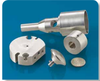
Development of a New Material: Monolithic Ti4O7 Ebonex Ceramic

It may on first consideration seem implausible that monolithic titanium dioxide ceramic, well-known as an electrical insulator/dielectric material, could ever be transformed into an electrically conductive material, with a potential application as a commercial electrode to rank alongside existing materials such as graphite, magnetite, silicon iron and the family of noble metal/oxide-coated titanium anodes. Yet this is now the case, and what follows is a first-hand account of its inception in an industrial metallurgical laboratory, and the successes and failures, as those involved, guided largely by intuition, backed with empirical trials, felt their way towards a useful and totally novel material.
The work described, was carried out in the Central Research & Development Laboratories of Messrs IMI plc, at Witton, Birmingham, and began in 1981. As it became apparent that a novel, electrically conductive and relatively corrosion-resistant material was within reach, there were some who felt it might provide an alternative substrate to titanium as a basis for precious metal (or oxide) coated electrodes to be used in aggressive electrolytes, such as the strong sulphuric acid used in many metal electro winning processes. However the commercial incentive for change from the widely-used lead-silver alloy anodes was weak, and it seemed to some, too big a step to introduce a brittle ceramic into an industry where large and robust components were handled with abandon.. Others contemplated an opportunity for the electrode material in reversing-polarity swimming pool electrochlorinators, a vast market. Yet others, from a manufacturing background, perceived improved methods...