Development of a New Material: Monolithic Ti4O7 Ebonex Ceramic
2 6: ELECTRICAL CONNECTION TO MONOLITHIC Ti4O7

2 6 ELECTRICAL CONNECTION TO MONOLITHIC Ti 4O 7

Initial thinking on how to make electrical connection to monolithic Ti 4O 7 treated the material as if it were metallic and therefore assumed that it should be electrically connected in the same way as for metals. If the material could be made non porous, this approach might well be fruitful.

Accepting that, for the present at least, commercially available material will continue to be porous, a logical approach, previously mentioned, might be to pore-fill, nickel electroplate and solder. In practice it has shown that such a procedure is less than satisfactory, as noted on page 28.

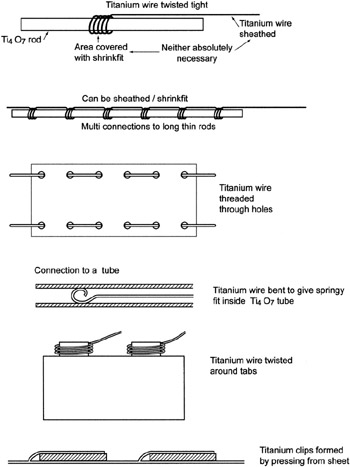
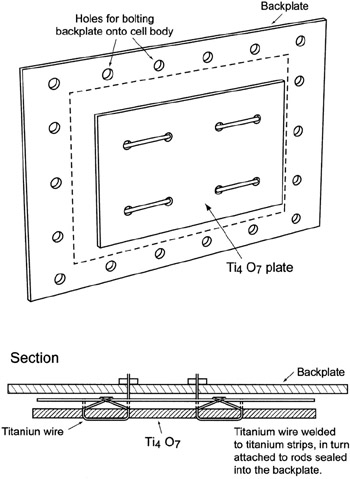
A better analogy in addressing the electrical connection problem, is with graphite and the techniques developed for making electrical connection to this material are essentially mechanical. Some of these are sketched in Figs. 2 28, 2 29, and though not exactly elegant in their conception, to date at least, these are proving both practical and sound.


Fig. 2 28: Methods of making mechanical electrical connection to porous monolithic Ti 4O 7 ceramic electrodes.

Fig. 2 29: Suggested method of incorporating porous monolithic Ti 4O 7 electrodes into electrochemical cells.

UNLIMITED FREE
ACCESS
TO THE WORLD'S BEST IDEAS

SUBMIT
Already a GlobalSpec user? Log in.

This is embarrasing...

An error occurred while processing the form. Please try again in a few minutes.

Customize Your GlobalSpec Experience

Category: Refractory Services
Finish!
Privacy Policy

This is embarrasing...

An error occurred while processing the form. Please try again in a few minutes.