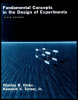
Fundamental Concepts in the Design of Experiments, Fifth Edition
In any experiment the experimenter is attempting to draw certain inferences or to make a decision about some hypothesis or "hunch" concerning the situation being studied. Life consists of a series of decision-making situations. As you taste your morning cup of coffee, almost unconsciously you decide that it is better than, the same as, or worse than the coffee you have been drinking in the past. If, based on your idea of a "standard" cup of coffee, the new cup is sufficiently "bad," you may pour it out and make a new batch. If you believe it superior to your "standard," you may try to determine whether the brand is different from the one you are used to or the brewing is different, and so forth. In any event, it is the extreme differences that may cause you to decide to take action. Otherwise, you behave as if nothing has changed. In such a trivial case, you run the risk that the decision based on so small an amount of data is wrong.
In deciding whether to carry an umbrella on a given morning, you "collect" certain data: you tap the barometer, look at the sky, read the newspaper forecast, listen to the radio, and so on. After quickly assimilating all available data including such predictions as "a 30% probability of rain today" you make a decision, somehow compromising between the inconvenience of carrying the umbrella and the possibility of having to spend money to have your clothes cleaned.