Fundamentals of Modern VLSI Devices

2.1 Show that the values of the Fermi-Dirac distribution function, Eq. (2.1), at a pair of energies symmetric about the Fermi energy Ef, are complementary, i.e., show that f( E f ? ? E) + f( E f+ ? E)=1, independent of temperature.
2.2 For a given donor level E d and concentration N d of an n-type silicon, solve the Fermi energy E f from the charge neutrality condition, Eq. (2.10) (neglecting the hole term). Show that E c ? E f approaches the complete ionization value, Eq. (2.11), under the condition of shallow donor level with low to moderate concentration. What happens if the condition is not satisfied?
2.3 Use the density of states N(E) derived in Appendix 3 to evaluate the average kinetic energy of electrons in the conduction band:

For a nondegenerate semiconductorin which f(E) can be approximated by the Maxwell-Boltzmann distribution, Eq. (2.2), show that
K.E.
=3/2 kT.
For a degenerate semiconductor at 0 K, show that
K.E.
=3/5( E f ? E c).
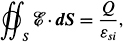
2.4 The 3-D Gauss s law is obtained after a volume integration of the 3-D Poisson s equation and takes the form
where the left-hand side is an integral of the normal electric field over a closed surface S, and Q is the net charge enclosed within S. Use it to derive the electric field at a distance r