Handbook of Petroleum Refining Processes, Third Edition

Gary C. Hughes, Michelle I. Wohlgenant, and Brian J. Doerksen
ConocoPhillips Company
Coke and Carbon Technology
Ponca City, Oklahoma
In today s competitive refining environment, delayed coking still remains the industry s leading economic choice in heavy oil upgrading technology. At most delayed coking sites, it is more profitable to limit coke generation due to its relatively low market value in comparison with the coker s other products. The top coking facilities are continually optimizing operations to increase flexibility for processing a variety of feedstocks, while maximizing higher-valued liquid and gas products. Equally critical in daily operations is the emphasis on maintaining a safe and reliable processing unit. The patented ConocoPhillips Delayed Coking Process is the most effective coking method commercially available today for designing new units and retrofitting existing sites.
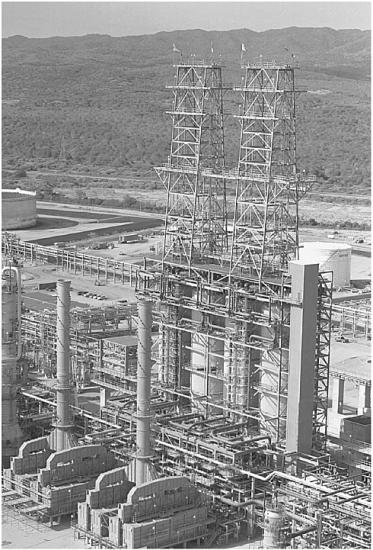
The proprietary ConocoPhillips Delayed Coking Process is based upon patented processes and many years of operating experience. The heritage Conoco company first entered the realm of delayed coking with construction of its first coker in the early 1950s in Ponca City, Oklahoma. Conoco has designed all its internal coking facilities constructed after 1960. Then in the early 1980s, Conoco began licensing its delayed coking technology to outside companies. Now refiners throughout the world are utilizing the combined ConocoPhillips company s expertise for residual oil conversion. Figure 12.1.1 is a photograph of a ConocoPhillips-designed coker in Venezuela that began operation in early 2001.
Over the last 50 years,...