HVAC: The Handbook of Heating, Ventilation and Air Conditioning for Design and Implementation

Chapter 9: Pipe Sizing

PIPE SIZING

The working fluids in HVAC systems are mainly water, steam, refrigerants, natural gas and oil. Pipes and pipe networks are used to appropriately distribute the working fluids throughout the system. Pipes must be correctly sized to ensure that pressures and flow rates are balanced and that the flow rates are maintained at design values. In this chapter the principles and methods of pipe sizing are discussed.

HVAC piping systems are characterized by relatively short pipe lengths and by the presence of many valves and fixtures. As a result the cumulative pressure loss due to valves and fixtures is at least as important as the pressure drop due to friction in the pipes. The pressure drop, the pipe length and diameter, the pipe roughness, the fluid density, the flow rate and the Reynolds number, and the loss characteristics of the individual fixtures used are all interrelated. The easiest computation is calculating the pressure loss for a system for a given flow rate when the fluid and its properties are known, the pipe material roughness, diameter and length are given, fixture types and their respective positions are known. For most other computations an iterative scheme may be needed.

Additional details can be found in the reference material published by ASHRAE, notably the ASHRAE Handbook series.

Pressure Drop Equations

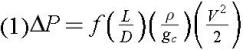
The pressure drop due to friction in a fully developed fluid flow inside a pipe is described by the Darcy-Weis-bach equation:


where ? P = pressure drop in lb f/ft

UNLIMITED FREE
ACCESS
TO THE WORLD'S BEST IDEAS

SUBMIT
Already a GlobalSpec user? Log in.

This is embarrasing...

An error occurred while processing the form. Please try again in a few minutes.

Customize Your GlobalSpec Experience

Category: Vortex Flow Meters
Finish!
Privacy Policy

This is embarrasing...

An error occurred while processing the form. Please try again in a few minutes.