Microwave Differential Circuit Design Using Mixed Mode S-Parameters
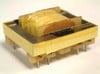
There are a number of sigma/delta hybrid component implementations from very high-frequency microwave designs to lumped-component networks. Transmission-line transformers can implement a sigma/delta hybrid with very wide bandwidth and provide a good practical mixed-mode analysis example. A transmission-line transformer uses a distributed combination of inductive (magnetic) and capacitive coupling. This combination of coupling mechanisms overcomes the low-frequency limitations of ferrite materials used to enhance the magnetic coupling of inductive transformers.
Distributed transmission-line elements are implemented with the use of filar wire. Filar wire is an arrangement of two or more wires constructed with a fixed insulation thickness between conductors. This provides a fixed distance of separation along the length of the individual wire conductors. A unit length transmission-line model can be associated with the filar wire physical implementation. Mixed-mode s-parameters can be used to separately analyze and characterize the filar wire transmission-line even-mode and odd-mode parameters.
A sigma/delta transmission-line transformer is shown in Figure 5.22 and is built using a tri-filar wire. The ports are numbered to match the diagram shown in Figure 5.19 and the ideal lossless standard and mixed-mode s-parameter matrices are shown in Figure 5.19. Both standard and mixed-mode s-parameters are equal to the ideal values of sigma/delta hybrid of Figure 5.19 except the port impedance associated with single-ended ports 3 and 4 is equal to half that of ports 1 and 2. For an ideal transformer model, ground connections are optional at the ground terminal associated with port 4 and/or the...