Mobile Telecommunications Factbook
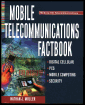
Get up to speed quickly and painlessly on everything wireless from PBX to PHS!
 TABLE OF CONTENTS
 Wireless phones have become a common sight in recent years, with cordless handsets in use in the home and cell phones mounted in vehicles and carried around in purses and briefcases. Lower-cost handsets are more portable, offer better connections and wider coverage, and longer battery life. All this, plus improved service quality, have led to millions of people taking advantage of mobile communications. The success of mobile communications has led to a revolution in office communications.
With office workers spending increasing amounts of time away from their desks supervising various projects, working at temporary assignments, attending meetings, and just walking corridors there is a growing need for wireless technology to help them stay in touch with colleagues, customers, and suppliers. According to various industry estimates, as much as 75 percent of all workers are mobile, spending significant amounts of time away from their desks. This lack of communication can adversely impact personal and organizational performance. The idea behind the wireless PBX is to facilitate communication within the office environment, enabling employees to be as productive while moving about as they would if they were sitting at their desk.
Almost any organization can benefit from improved communications offered by a wireless PBX system, especially those engaged in: