Power Generation Handbook: Selection, Applications, Operation, and Maintenance
Electric power is generated most economically at 14 to 25 kV.1 System loads such as motors, lights, and so on, require a voltage source of 440, 220, and 110 V. Transformers are needed to change the voltage level. They are also used for these reasons:
To reduce transmission losses between power plants and the load by stepping up the voltage (when the voltage is stepped-up, the current will be stepped down. This results in reduction in transmission losses, which are proportional to the square of the current).
To reduce the diameter of the transmission line (amount of copper or aluminum) due to a reduction in the current flowing in the line.
Typical transmission voltages are 13.2, 22, 66, 230, 345, and 500 kV. In general, the longer the distance, the higher the voltage used.
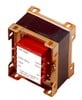
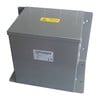
The two types of transformers are: (1) air-cooled (dry-type), and (2) oil-filled. The transformer rating increases with improved cooling methods. These are the typical ratings for various types of transformers:
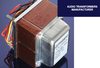
The two types of dry transformers are self-air-cooled and forced-air-cooled. The heat is removed by natural convection in self-air-cooled transformers. In forced-air-cooled, it is removed by blowers. The rating of dry-type transformers used to be limited to less than 1 MVA. However, modern technology pushed this rating to 20 MVA. This was mainly due to improvements in the quality of insulation and mechanisms of heat removal from the transformer.
In this type of transformer, the windings...