This book provides quick, simple reference material on practical RCM. In addition to maintenance professionals, the book will be useful to nonmaintenance managers and engineers or anyone who desires a broader overview of maintenance performance theory from a simple, nontechnical perspective.
What is RCM?
RCM is a maintenance plan development process. RCM was first noted in a 1978 publication sponsored by the U. S. Department of Defense. That work documented a process developed through more than 20 years of commercial-aviation experience that demonstrated success at over-achieving airline operation, reliability, and safety goals. Participants included the government the Federal Aviation Association, the airline industry, the Airline Transport Association, individual airlines especially United Airlines, its employees, and suppliers and, especially, Boeing. Air travelers, as well as the general public at large, are the primary beneficiaries.
RCM focuses on two words: reliability and maintenance. While most people are plausibly comfortable with maintenance, the term reliability introduces lesser-appreciated meanings and contexts. Risk, probability, consequences, local effects, secondary interactions these reliability ideas place most people on unsteady ground ( see Fig. 1-1).
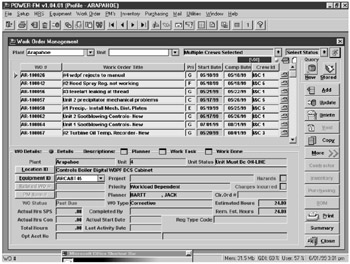 Figure 1-1: Plant Active Trouble Reports Morning Work List
 Equipment in systems interacts; equipment in systems comprises industrial facilities, and systems provide functionality. Some systems create product or output directly; others provide support. Some systems provide public health and safety protection (e.g., emissions removal systems for coal-fired power plants); others monitor the status of intangible process elements.
System Development
For systems, RCM identifies functions that matter, equipment providing those functions; and it classifies...

 TABLE OF CONTENTS