RCM Guidebook: Building a Reliable Plant Maintenance Program
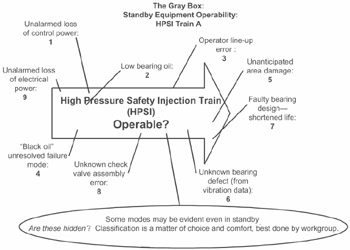
Learning complex technical systems from the ground-up takes time. Maintenance and plant systems engineers must learn fuel, turbines, control rod drives, refueling equipment, equipment cooling, and many other systems plus their many nuances. Even after years, many feel they still have much to learn! One person cannot learn a complex system in two weeks, yet RCM analysts must do exactly this! Time is better spent learning a system only well enough to discover its reliability issues for presentation to responsible owners (usually the systems and component engineers and their systems support teams). Presenting system equipment owners the weaknesses of their equipment strategies for expert review stimulates their thoughts. Their knowledge and experience provide the major RCM process benefit concurrent with the maintenance plan changes. Documented outcomes result. Developing system questions and issues captures system requirements supporting new or modified PM tasks ( see Fig. 2-18).
Breaking down facility constituent systems retraces designer steps. Systems provide design functionality to meet production, safety, and cost requirements. Differentiation into systems, sub-systems, and equipment is a first analysis step. AE system descriptions from startup provide source material. For older facilities, design may have evolved where system design descriptions may not be directly available. Old designs may also require update. An RCM effort may have to reconstruct the formal, expressed intent of a system's design.
Systems implicitly develop facility design requirements, ( see Fig. 2-19) They include vendor requirements that...