Reliability & Life Testing Handbook, Volume 2

In sudden-death testing [1, pp. 82-86; 22, pp. 31-32; 3, pp. 181-190] the total sample to be tested, usually of 40 units or more, possibly as few as nine units, and preferably more than 15, is arbitrarily divided into several groups, usually five or more, but possibly as few as three groups. All groups are to be equal in size. Each group is considered to be an assembly. All units in each group are usually put to test simultaneously, and when the first unit in a group fails that assembly or that group is considered to have failed. Testing is stopped on the remaining unfailed units in that group, as soon as the first unit in that group fails, hence the name "Sudden-Death."
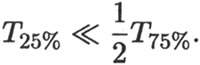
Sudden-death testing reduces testing time considerably, particularly in cases where the lower quartile of a life distribution is considerably lower than the upper quartile, or in cases where
The use of sudden-death testing has shortened bearing test times to 1/3 or 1/4 of what would be required in regular tests where all units are tested to failure. This is so because the elapsed test time is only the time to the first failure of the group that fails last when all groups are put to test simultaneously, or the sum of the times to the first failure of all groups when the groups are tested consecutively.
Sudden-death testing is applicable to all kinds of units with a sample size of nine or more...