Resource Allocation in Hierarchical Cellular Systems
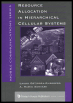
A highly-detailed and highly technical examination of cellular channel
allocation strategies.
 TABLE OF CONTENTS
 A description of the classic FCA strategy is given in this section. In addition, some strategies that are based on FCA but have additional features that allow them to perform better are also described.
In the FCA strategy, the area of service is partitioned into a number of cells and the same number of channels is permanently assigned to each cell according to a reuse pattern [7]. These channels are called nominal channels. The same set of channels can be reused in another cell provided that the reuse distance D is fulfilled [7]. The reuse distance is the minimum separation of identical channelsthat have the same carrier frequency, at which there is acceptable interference (CIR)
| (2.1) | 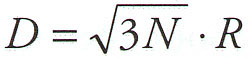 |
| (2.2) | 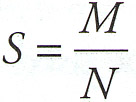 |
| (2.3) | 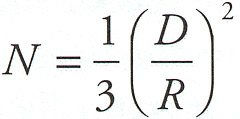 |