Semiconductor Manufacturing Handbook
Written by international experts, this book will provide engineers with the principles, applications, and solutions needed to design and manage semiconductor manufacturing operations.
Clint Haris
Brooks Automation
Chelmsford, Massachusetts
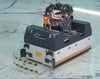
In order to stay competitive, integrated circuit (IC) manufacturers must continually improve the productivity of their factories. Increasing wafer size as well as a trend toward larger fabs with thousands of wafer starts per day are two methods that IC manufacturers use to minimize their manufacturing costs. To support the material logistics requirements of these factories, companies have turned to automated material handling systems (AMHS) (Fig. 32.1) to ensure that the right material is delivered to the right place at the right time.

An AMHS comprises a set of components utilized to store and move materials from one place to another in a factory without the need for human intervention. Stockers, a key component of AMHS, are placed in each bay of the factory and are utilized to store carriers as well as to act as a connection point between distinct transport systems. The material movement in an AMHS is accomplished by transport systems that usually take the form of an overhead hoist transport (OHT), overhead shuttle (OHS), automated guided vehicle (AGV), rail guided vehicle (RGV), or conveyor system.
There are several drivers behind the move to the fab-wide automation of material transfer. These drivers include personnel utilization, ergonomic considerations, risk reduction, improved tool utilization, and reduced manufacturing cycle time.
Personnel Utilization. It is often not practical to provide...

 TABLE OF CONTENTS