Small Signal Amplifier Design: A Collection from Applied Microwave & Wireless
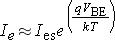
One of the spectral lines generated by device nonlinearities during a two-tone test is a low-frequency product, ( f 2 ? f 1). For the case of a test tone spacing of 1 MHz, this 1 MHz product modulates the base-emitter and collector-emitter voltages of the LNA at a 1 MHz rate. Recalling that for a bipolar transistor, emitter current is an exponential function of the base-emitter voltage,
One can imagine this low frequency AC signal present at the device terminals varying the operating point of the transistor at the rate ( f 2 ? f 1), thus adversely impacting distortion product levels.
If a relatively large value capacitor is placed across the base-emitter junction to bypass this low-frequency product ( f 2 ? f 1), the voltage fluctuation seen by the baseemitter junction of the transistor can be reduced, and the levels of the third-order products minimized (Figure 1). Capacitor C3, 0.1 F, performs the low-frequency bypass function described here. An improvement in third-order intercept point of approximately 5 to 10 dB can be expected by using this trick. The same effect may be seen by using extra charge storage on the collector, but the results are usually not nearly as dramatic.
The closer together the two input test tones f 1 and f 2 in frequency, the lower frequency the product or beat note ( f 2 ? f 1).