Small Signal Microwave Amplifier Design

Chapter 5: Narrowband Circuit Synthesis

5.1 Introduction

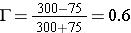
This chapter discusses the design of impedance-matching circuits. It often is necessary to connect components or networks that have different impedances. If these components were to be indiscriminately connected, energy would be reflected between them, causing energy loss and other unwanted effects. We can use impedance-matching circuits between components in a network so that power is not "bounced around" between them. For example, many televisions come with a 75 ohm type F connector instead of 300 ohm antenna terminals. Suppose you wanted to use an antenna that has a 300 ohm impedance. If a transmission line with a characteristic impedance of 75 ohms is terminated with a 300 ohm load, the load has a reflection coefficient of


i.e., 60% of the power will be reflected at the antenna terminals. To prevent this, we need a circuit to match the 70 ohm transmission line to the 300 ohm antenna terminals.

Impedance-matching circuits are used in two ways. The most common application is to eliminate reflections between components or networks. Most transistors are not matched to the transmission lines that connect them; hence, small circuits are designed to match the input and output impedance of the transistor to the input and output transmission lines. Matching a transmission line to a load assures that power is efficiently extracted from the source or delivered to the load by the transistor. Loads that are not matched reflect energy, making the power transfer between these circuits inefficient. The second use for matching circuits...

UNLIMITED FREE
ACCESS
TO THE WORLD'S BEST IDEAS

SUBMIT
Already a GlobalSpec user? Log in.

This is embarrasing...

An error occurred while processing the form. Please try again in a few minutes.

Customize Your GlobalSpec Experience

Category: Impedance Matching Networks
Finish!
Privacy Policy

This is embarrasing...

An error occurred while processing the form. Please try again in a few minutes.