Small Signal Microwave Amplifier Design

6.5: Power Gain

6.5 Power Gain

This section describes the different forms of gain and how they are calculated. If the conjugate match is not stable, it could take some time to choose a match by trial and error that results in a reasonable gain. For each try, a matching circuit would have to be designed and entered into the microwave circuit simulator. It is more efficient to use the mapping functions from Chapter 4 and calculate circles of constant gain. There are a several different ways to measure amplifier gain.

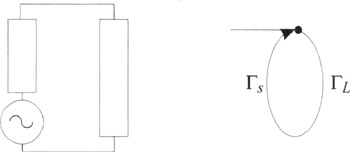
Figure 6-10 shows a signal flow diagram of a source and load. The power delivered to a load is the incident power minus the reflected power.


Figure 6-10: A generator with a reflection coefficient of ? s connected to a load with a reflection coefficient ? L.

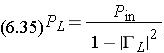
The power delivered to a load by a transmission line with a perfectly matched source is


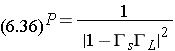
When the source is not matched, the power delivered to a load is


When an amplifier is inserted between a generator and a load, it is important to know how much the signals will be amplified. There could be reflections from the load, the generator, or the input and output of the two-port. This creates an opportunity to describe the gain of the amplifier in several different ways.

Power gain is usually expressed by one of the following three quantities: transducer power gain ( G t), power gain, or operating power gain, ( G p)...

UNLIMITED FREE
ACCESS
TO THE WORLD'S BEST IDEAS

SUBMIT
Already a GlobalSpec user? Log in.

This is embarrasing...

An error occurred while processing the form. Please try again in a few minutes.

Customize Your GlobalSpec Experience

Category: Amplifier and Comparator Chips
Finish!
Privacy Policy

This is embarrasing...

An error occurred while processing the form. Please try again in a few minutes.