Small Signal Microwave Amplifier Design

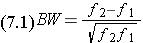
This chapter focuses on broadband matching methods developed for broadband applications and introduces some of the techniques that are effective for broadband amplifier design. The terms wideband and ultrawideband are used loosely in the amplifier design community. Their definitions are widely accepted, however. The bandwidth factor is defined as
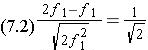
where f 1 is the lower frequency limit and f 2 is the upper frequency limit. The bandwidth percentage is 100% times the bandwidth factor. Wideband refers to circuits that have a bandwidth factor between 0.50 and 1.0. A circuit with an octave bandwidth has an upper frequency that is twice the lower frequency, or f 2 = 2 f 1. The bandwidth factor of an octave bandwidth circuit is
or 70.7% bandwidth. This would qualify as a wideband circuit.
An ultrawideband circuit has a bandwidth factor greater than 1.0, or 100%. A circuit with a decade bandwidth could have an upper frequency limit 10 times higher than the lower frequency limit. The bandwidth factor of such a circuit would be 9/ ?10 = 2.85, or 285%. A circuit with a decade bandwidth is considered an ultrawideband circuit. Most techniques introduced in this chapter are more applicable to wideband circuits rather than to ultrawideband amplifiers.
Section 7.2 shows the approximate circuit model for the transistor. Some broadband amplifier design techniques use the equivalent circuit model of the transistor. The elements of the transistor model can be used as part of the matching...