Standard Handbook of Electronic Engineering, Fifth Edition
Chapter 25.2: INSTRUMENTS FOR MEASURING CURRENT, VOLTAGE, AND RESISTANCE

Scott Stever

INTRODUCTION

Voltage, and current, both ac and dc, and resistance are quantities commonly measured by electronic instruments. In the simplest case, each measurement type is performed by an individual instrument a voltmeter measures voltage, an ammeter measures current, and an ohmmeter measures resistance. These instruments have many elements in common. The more classical, electromechanical meters are the easiest-to-use instrument for performing these measurements. A multimeter combines these instruments, and sometimes others, together into a single, general-purpose multifunction instrument.

Categories of Meters

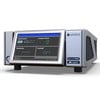
There are two primary types of meters general purpose and specialty. General-purpose meters measure several types of electrical parameters such as voltage, resistance, and current. A digital multimeter (DMM) is an example of a general-purpose meter (Fig. 25.2.1). Specialty meters are generally optimized to measure a single parameter very well, emphasizing either measurement accuracy, bandwidth, or sensitivity. Listed in Table 25.2.1 are various types of meters and their measuring capabilities.

Table 25.2.1: Meters Types and Features
Type of meter Multifunction Measuring range Frequency range Speed, max readings/second Best accuracy Digits

General Purpose

Handheld DMM

Y

10 ?V ?1000 V;

20 Hz ?20 kHz

2

0.1%

31/2 ?41/2

1 nA ?10 A;

10 m ? ?50 M ?

Bench DMM

Y

10 ?V ?1000 V;

20 Hz ?100 kHz

10

0.01%

31/2 ?41/2

1 nA ?10...

UNLIMITED FREE
ACCESS
TO THE WORLD'S BEST IDEAS

SUBMIT
Already a GlobalSpec user? Log in.

This is embarrasing...

An error occurred while processing the form. Please try again in a few minutes.

Customize Your GlobalSpec Experience

Category: LCR Meters
Finish!
Privacy Policy

This is embarrasing...

An error occurred while processing the form. Please try again in a few minutes.