Structural Renovation of Buildings: Methods, Details, and Design Examples

13.3: Water Leakage

13.3 Water Leakage

13.3.1 What Water Leakage does

Water leakage is the most common and easily noticed problem with exterior walls. Masonry of all kinds is permeable to water, especially to the driving rains that are common in many areas of the United States. According to Grimm,1 there are at least 52 cities in the contiguous states that receive rain on 15 or more days during one or more months of the year.

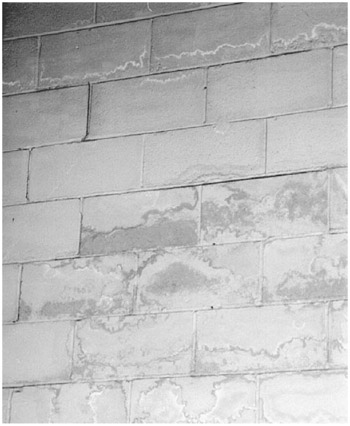
The signs of water penetration in walls without interior finishes are unmistakable (Fig. 13.2). Fortunately for the pictured wall, the water that left the stains eventually evaporated and caused little other damage. The situation is more serious when there are interior finishes, as water evaporation is slowed down, and the moisture lingers within the wall, causing deterioration of the finishes, corrosion of metal fasteners, and degradation of insulation. Prolonged exposure to moisture can lead to growth of mold and mildew and to decay of wood walls. Air-quality problems are sure to follow, with the occupants' absenteeism climbing and morale plunging.


Figure 13.2: Water stains on the inside of single-wythe masonry are unmistakable signs of leakage.

The Wall Street Journal11 states in alarm: 'A decade after a huge boom in shiny new glass-and-metal-cased buildings, many of those 10-to 15-year-old edifices are leaking." The paper mentions a few cases of people having to deal with excessive water penetration. In an office building in San Antonio, the workers covered their desks with plastic each day before going home. In...

UNLIMITED FREE
ACCESS
TO THE WORLD'S BEST IDEAS

SUBMIT
Already a GlobalSpec user? Log in.

This is embarrasing...

An error occurred while processing the form. Please try again in a few minutes.

Customize Your GlobalSpec Experience

Category: Architectural Coatings
Finish!
Privacy Policy

This is embarrasing...

An error occurred while processing the form. Please try again in a few minutes.