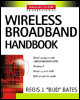
Wireless Broadband Handbook

Chapter 4: Cellular Communications

Overview

The world, as we now know it, is changing at a terrific rate due to technology advances. The year 1984 marked a major milestone for the telecom industry in the twentieth century. The AT&T monopoly was broken up and it was the year we were first introduced to wireless service.

Much has happened in the cellular industry around the world since its original introduction in 1984. In 1984, cellular communications became the hot button in the industry. At the time, all systems used analog radio transmissions. Why did they choose analog? It was all that the providers had available at the time, and digital was seen as a future innovation. Digital has its detractors as well. Roaming may be more difficult using a digital-based phone than an analog. Because there is no single accepted industry standard in digital technology today and the technologies are incompatible, roaming (using another wireless operator s network while traveling) may be difficult. Analog has better coverage and greater service availability than digital. The initial cost for analog is usually cheaper than for digital or at least the proponents will have you believe this.

As you ve probably noticed, price wars abound, involving all wireless operators. In fact, in some areas, wireless operators are offering pricing plans that rival even landline services. The average monthly bill of a wireless customer has been slashed in half in the past decade, just shy of $40 from $95, and the cost per minute has dropped to an average of less...

UNLIMITED FREE
ACCESS
TO THE WORLD'S BEST IDEAS

SUBMIT
Already a GlobalSpec user? Log in.

This is embarrasing...

An error occurred while processing the form. Please try again in a few minutes.

Customize Your GlobalSpec Experience

Category: Wireless Communications Services
Finish!
Privacy Policy

This is embarrasing...

An error occurred while processing the form. Please try again in a few minutes.