System-in-Package RF Design and Applications

The SiP assembly process is complicated by the addition of discrete components. The placement and soldering of these components is a common practice. While reliably accomplished on motherboard assemblies for many years, it has only been accomplished within a molded plastic package since the start of the twenty-first century. The molded plastic package introduces new reliability requirements, moisture absorption and multiple reflow, that are not present with the motherboard assembly. Soldermask, overmold material, process steps, plating technology, and lesser contributors have all been adjusted in the SiP design to meet the stringent and always increasing reliability requirements.
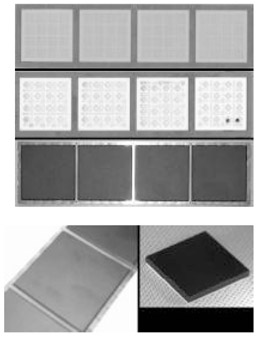
Initially, the SiP concept was limited to laminate designs. It has recently expanded to include discrete components within MLF/QFN modules and adapting the overmold process to LTCC. While discrete components have been utilized in LTCC SiP designs for many years, these designs were analogous to motherboard assembly, as opposed to packaging assembly. They employed a metal lid or plastic cover similar to a shield within a motherboard. The continued cost reduction demands of the industry have required replaceing this approach with a low-cost overmold process. This is not a logical sequential step, as the overmold process requires a clamping pressure. Clamping a laminate panel is easy; however, clamping a brittle LTCC panel is not readily achievable. A low-cost overmold solution has recently been developed to encapsulate a panel of LTCC modules in one step (see Figure 3.1) [1].
The general SiP process flow starts...