
Inverter Transformer Signal Transformers
Description
Inverter Transformer Signal Transformers are devices designed to convert direct current (DC) into alternating current (AC) by employing a transformer to step up the voltage. These transformers are integral in generating high-voltage AC from low-voltage DC sources, enabling the transformation of electrical signals for various applications.
Working Principle
The working principle of inverter transformer signal transformers is based on electromagnetic induction. The DC source polarity is alternately switched across the transformer's primary coil, which induces an alternating voltage in the secondary coil. This process is governed by Faraday's law of induction, where a changing current in one coil induces a current in another coil. The transformers are particularly useful because they can efficiently step up or step down voltages and currents, making them ideal for impedance transformation and signal isolation.
Applications
Inverter transformer signal transformers are used in a variety of applications. They are essential in power systems for stepping up or stepping down voltages, which is crucial for efficient power transmission over long distances. They are also used in RF circuits and ultra low-noise applications, such as sensitive measurements, where transformer-based designs are preferred for their ability to handle AC signals effectively.
Advantages over other Signal Transformers
One of the key advantages of inverter transformer signal transformers is their broadband operation, which allows them to faithfully duplicate, invert, and scale voltages and currents independent of frequency. This makes them superior to passive LC circuits, which only operate effectively over a narrow bandwidth. Additionally, they do not require a power supply and work well with AC signals, such as audio, providing efficient signal transformation without the need for additional power sources.
Limitations
A significant limitation of inverter transformer signal transformers is their inability to work with DC signals. Since transformers rely on a varying magnetic field to induce voltage, they cannot function with static or DC signals. This limitation necessitates the conversion of DC signals into AC before they can be processed by the transformer, which can add complexity to the system.
Considerations
When considering the use of inverter transformer signal transformers, several factors should be taken into account. Initial costs can vary depending on the design and materials used, and operating expenses may be influenced by the efficiency of the transformer in the specific application. Durability and accuracy are critical, as transformers must withstand the electrical and thermal stresses of operation. Replacement and maintenance costs should also be considered, as transformers may require periodic inspection and servicing to ensure optimal performance.
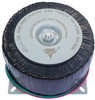
from Hengda Electronic Factory
Safe and reliable, small volume, light weight, high efficiency, low magnetic leakage. The dimension and installation method can be adjusted in order to meet the needs of different customers. We have certificates such as UL, CE, RoHS, CESI, ISO9001 and so on. The isolation transformer adopts aluminum... [See More]
- Other Transformer Types / Applications: Inverter Transformer; Electronics
- Operating Frequency: 50 to 60
- Winding Turns: Step-Up Transformer
- Mounting: Chassis

from Frontier Electronics Corp.
Frontier Electronics designs and manufactures customer specific solutions when industry standard products do not meet their requirements. Redesigns for tighter tolerances, smaller footprints, higher performance, etc.. Redesigning and/or re-manufacturing obsolete components to conform to the latest... [See More]
- Other Transformer Types / Applications: CCFL Inverter; Inverter Transformer
- Mounting: Chip Transformer
- Operating Frequency: 90000 to 140000
- Package Type: Surface Mount