
High Frequency Transformer Signal Transformers
Description
High Frequency Transformer Signal Transformers are specialized devices designed to transfer electrical signals between circuits at high frequencies. They consist of two wire coils, known as the primary and secondary coils, which are wrapped around a core. These transformers are used to modify the amplitude of the signal, either stepping it up or down, or to isolate the signal between circuits.
Working Principle
High Frequency Transformer Signal Transformers operate on the principle of electromagnetic induction. When an alternating current flows through the primary coil, it generates a magnetic field that induces a voltage in the secondary coil. The voltage induced in the secondary coil is determined by the turns ratio of the coils. This process allows the transformer to transfer energy or information between circuits without a direct electrical connection. These transformers are particularly useful because they can operate over a wide range of frequencies, making them ideal for applications that require signal isolation or impedance matching.
Applications
High Frequency Transformer Signal Transformers are used in a variety of applications. For example, they are employed in radio frequency (RF) applications for impedance matching in the RF/microwave spectrum. They are also used in telecommunications for signal isolation, which is crucial for maintaining high bandwidth and fast switching capabilities. Additionally, these transformers are utilized in audio applications to ensure signal isolation and impedance matching, which are essential for maintaining sound quality.
Advantages over other Signal Transformers
One of the main advantages of High Frequency Transformer Signal Transformers is their ability to operate over a wide range of frequencies, unlike transformers designed for mains power, which operate at lower frequencies. This makes them suitable for applications that require high-frequency operation, such as RF and audio applications. Additionally, they provide excellent signal isolation, which is critical for preventing signal crossing and current leakage between circuits.
Limitations
High Frequency Transformer Signal Transformers have limitations, particularly in terms of frequency range. They can only perform adequately over a limited range of frequencies, and using a transformer that is not suitable for the intended frequency range can lead to signal and power losses, as well as overheating. Additionally, core loss becomes a significant factor at higher frequencies, which can impact the transformer's efficiency.
Considerations
When selecting a High Frequency Transformer Signal Transformer, several factors should be considered. Initial costs can vary depending on the materials and manufacturing techniques used. Operating expenses may be influenced by the transformer's efficiency and the frequency range it supports. Durability is another important consideration, as transformers must withstand the thermal and electrical stresses of high-frequency operation. Accuracy in terms of signal transfer and impedance matching is crucial for maintaining performance. Finally, replacement and maintenance costs should be evaluated, as transformers may require periodic inspection and servicing to ensure optimal operation.

from Amgis Toroidal Power Products, LLC
Current transformers (CTs) are used for measurement of electric currents and can be known as instrument transformers. When current in a circuit is too high to directly apply to measuring instruments, a current transformer produces a reduced current accurately proportional to the current in the... [See More]
- Other Transformer Types / Applications: Current-Sense; High Frequency Transformer
- Operating Temperature: -40 to 120
- Operating Frequency: 20000 to 200000
- Mounting: PCB/SMD

from Standex-Meder Electronics
CSB Series High/Low Frequency Current Sense Transformer in PCB through-hole mount (THT) plug-in design with primary and secondary windings that are PC integrated, eliminating need for the customer to install primary winding separately as is usually required in toroidal designs. Low cost compact... [See More]
- Other Transformer Types / Applications: Current-Sense; High Frequency Transformer
- Mounting: PCB/SMD
- Operating Temperature: -40 to 125
- Package Type: Through Hole Plug-in

from Amp-Line Corp.
High Frequency Transformer: Primary Voltage: 25 V rms., Secondary Voltage: 5000 V rms., Ouptut Power: 1000 watts; Frequency Range: 100 Hz - 600 Hz. Custom specifications can be achived upon request. [See More]
- Other Transformer Types / Applications: Constant Voltage Transformer (CVT); Single Phase Transformer; High Frequency Transformer; High Voltage Transformer; Electronics
- Operating Frequency: 100 to 600
- Winding Turns: Step-Up Transformer
- Power Rating (Watts): 1000

from Amp-Line Corp.
High Frequency Transformer: Primary Voltage: 25 V rms., Secondary Voltage: 150 V rms., Ouptut Power: 250 watts; Frequency Range: 100 Hz - 5000 Hz. Custom specifications can be achived upon request. [See More]
- Other Transformer Types / Applications: Constant Voltage Transformer (CVT); Single Phase Transformer; High Frequency Transformer; Electronics
- Operating Frequency: 100 to 5000
- Winding Turns: Step-Up Transformer
- Power Rating (Watts): 250
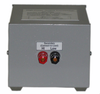
from Amp-Line Corp.
High Frequency Transformer: Primary Voltage: 25 V rms., Secondary Voltage: 300 V rms., Ouptut Power: 350 watts; Frequency Range: 100 Hz - 5000 Hz. Custom specifications can be achived upon request. [See More]
- Other Transformer Types / Applications: Constant Voltage Transformer (CVT); Single Phase Transformer; High Frequency Transformer; Electronics
- Operating Frequency: 100 to 5000
- Winding Turns: Step-Up Transformer
- Power Rating (Watts): 350