
Wire Mesh Strain Reliefs
Last Updated: April 1, 2025
Description
Wire Mesh Strain Reliefs are devices designed to protect cables and wires from mechanical stress and damage. They achieve this by securing the cable at the connection point, preventing it from being pulled out or damaged due to external forces.
Working Principle
Wire Mesh Strain Reliefs work by absorbing and distributing the mechanical forces exerted on cables, such as push and pull forces. This is achieved through a mesh structure that encases the cable, providing flexibility and strength. The mesh design allows for the dissipation of stress along the length of the cable, reducing the risk of damage at the connection point. This makes them particularly useful in environments where cables are subject to frequent movement or vibration.
Applications
Wire Mesh Strain Reliefs are commonly used in industrial settings where cables are exposed to harsh conditions. Specific examples include their use in manufacturing plants where machinery movement can exert stress on cables, and in outdoor installations where environmental factors such as wind or temperature changes can affect cable integrity.
Advantages over other Strain Reliefs
Wire Mesh Strain Reliefs offer superior flexibility compared to rigid strain relief options. This flexibility allows them to accommodate a wider range of cable movements without compromising the integrity of the connection. Additionally, the mesh design provides enhanced protection against abrasion and mechanical wear, which can be a limitation in more rigid strain relief designs.
Limitations
One limitation of Wire Mesh Strain Reliefs is that they may not provide the same level of waterproof protection as other types of strain reliefs, such as endbells. This can be a concern in applications where moisture ingress is a significant risk.
Considerations
When selecting Wire Mesh Strain Reliefs, it is important to consider the initial cost, which may be higher than simpler strain relief options due to the complexity of the mesh design. However, their durability and ability to reduce maintenance costs by preventing cable damage can offset these initial expenses. Additionally, the flexibility and strength of the mesh can enhance the longevity of the cables, reducing the need for frequent replacements.
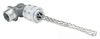
from Hubbell Electrical Products
UL, CSA, CSA (CANADA AND US) APPROVAL. HAZARDOUS LOCATION, LIQUIDTIGHT APPLICATION. 90 DEG MALE CONNECTOR TYPE. 1/2 INCH THREAD SIZE. 0.187 TO 0.25 INCH CORD SIZE. STAINLESS STEEL MESH MATERIAL. COPPER FREE ALUMINUM CONNECTOR MATERIAL. HUBBELL. BRAND. APPLICABLE STANDARD CEC 18-106, CEC 18-122, CEC... [See More]
- Features: Wire Mesh
- Mounting Size: 0.5000
- Material: Copper Free Aluminum

from Hubbell Electrical Products
UL, CSA, CSA (CANADA AND US) APPROVAL. CHEMICAL/SEWAGE TREATMENT, FOOD PROCESSING APPLICATION. 90 DEG MALE CONNECTOR TYPE. 1/2 INCH THREAD SIZE. 0.25 TO 0.375 INCH CORD SIZE. KEVLAR MESH MATERIAL. NYLON CONNECTOR MATERIAL. HUBBELL. BRAND. Z MODEL [See More]
- Features: Wire Mesh
- Mounting Size: 0.5000
- Material: Polyamide / Nylon®

from Hubbell Electrical Products
UL, CSA APPROVAL. CHEMICAL/SEWAGE TREATMENT, FOOD PROCESSING APPLICATION. STRAIGHT MALE CONNECTOR TYPE. 3/8 INCH NPT THREAD SIZE. 0.187 TO 0.25 INCH CORD SIZE. KEVLAR MESH MATERIAL. NYLON CONNECTOR MATERIAL. HUBBELL. BRAND. Z MODEL [See More]
- Features: Wire Mesh
- Mounting Size: 0.3750
- Material: Polyamide / Nylon®
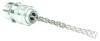
from Hubbell Electrical Products
UL, CSA, CSA (CANADA AND US) APPROVAL. HAZARDOUS LOCATION, LIQUIDTIGHT APPLICATION. STRAIGHT MALE CONNECTOR TYPE. 3/8 INCH THREAD SIZE. 0.25 TO 0.312 INCH CORD SIZE. STAINLESS STEEL MESH MATERIAL. COPPER FREE ALUMINUM CONNECTOR MATERIAL. HUBBELL. BRAND. APPLICABLE STANDARD CEC 18-106, CEC 18-122,... [See More]
- Features: Wire Mesh
- Mounting Size: 0.3750
- Material: Copper Free Aluminum