
MS-DOS Network Cards and Network Controllers
Last Updated: April 1, 2025
Description
MS-DOS Network Cards and Network Controllers are hardware components designed to facilitate network communication for computers running the MS-DOS operating system. These devices enable the connection of a computer to a network, allowing it to send and receive data over that network. They are essential for establishing network connectivity in systems that operate on the MS-DOS platform.
Working Principle
Network cards and controllers for MS-DOS work by interfacing with the computer's motherboard through a host bus, such as ISA or PCI, to manage data transmission between the computer and the network. They use specific network protocols, such as Ethernet, to format and transmit data packets over the network. The network card translates data from the computer into a format suitable for network transmission and vice versa, ensuring seamless communication. These devices are useful because they enable computers to connect to local area networks (LANs), facilitating data sharing and communication between multiple systems.
Applications
MS-DOS Network Cards and Network Controllers are used in various applications where network connectivity is required for MS-DOS systems. For example, they are employed in legacy industrial systems that rely on MS-DOS for control and monitoring tasks. They are also used in educational environments where older computer systems are still in operation, allowing these systems to connect to modern networks for data exchange and resource sharing.
Advantages over other Network Cards and Network Controllers
One advantage of MS-DOS Network Cards and Network Controllers is their compatibility with older hardware and software environments. They are specifically designed to work with the MS-DOS operating system, ensuring reliable performance in legacy systems. Additionally, these devices often support direct-driven network configurations, which simplify setup and debugging processes, making them easier to manage in environments where technical resources may be limited.
Limitations
A significant limitation of MS-DOS Network Cards and Network Controllers is their outdated technology, which may not support modern network protocols or higher data transfer rates. They are typically limited to older network standards, such as 10Base-T Ethernet, which can restrict their use in contemporary network environments that require faster data transmission speeds. Additionally, the availability of replacement parts and technical support for these devices may be limited due to their age.
Considerations
When considering the use of MS-DOS Network Cards and Network Controllers, it is important to evaluate the initial costs, which may be lower due to the age of the technology. However, operating expenses could be higher if specialized maintenance or replacement parts are needed. Durability and accuracy are generally reliable within the context of their intended use, but users should be aware of potential compatibility issues with newer network infrastructure. Replacement and maintenance costs should also be considered, as sourcing parts for older technology can be challenging and potentially costly.

from ACCES I/O Products, Inc.
Features. Universal PCI, PCI-X, 3.3V and 5V compatible (Call for PCI-Express availability). Two or Four RS-232 Serial Communication ports. Throughput up to 921.6 Kbps. 32-Bit PCI-bus Interface. UART includes 16-Byte FIFO Buffer. Compatible w/ MS-DOS, Windows, & Linux. FCC and CE approved. The... [See More]
- Operating System: Windows 95/98; MS-DOS; Windows NT; Windows 2000; Linux
- Data Rate: 920
- Protocol / Network: Serial
- Host Bus: PCI

from ProSoft Technology, Inc.
The ADM module is a single-slot, backplane compatible solution for the Quantum platform that supports user-developed applications. "C" code applications are developed using Digital Mars C++ 16-bit development tools (included), downloaded to, and then debugged on the module. The ProTalk module is a... [See More]
- Operating System: MS-DOS
- Port Type: RS232; RS422; RS485
- Protocol / Network: Serial
- Operating Temperature: 0 to 60
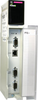
from ProSoft Technology, Inc.
The PTQ-ADMNET module acts as an input/output module between the Ethernet Explicit Messaging network, and the Quantum backplane. Data transfer from the Quantum processor is asynchronous from the actions on the Ethernet network. A 4000-word register space in the module exchanges data between the... [See More]
- Operating System: MS-DOS
- Port Type: RS232
- Protocol / Network: Fast Ethernet; Serial
- Operating Temperature: 0 to 60