
Point-to-Multipoint Network Modems
Description
Point-to-Multipoint Network Modems are devices designed to facilitate communication between a central hub and multiple remote nodes. These modems enable the central point to transmit data to multiple endpoints simultaneously, allowing for efficient data distribution across a network.
Working Principle
Point-to-Multipoint modems operate by establishing a central communication hub that connects to multiple subscriber units. This setup is akin to a star topology, where the central hub acts as the primary transmitter, sending data to various endpoints. The modems use specific frequency bands and radio techniques to ensure reliable data transmission. Frequency hopping, for instance, is a method used to avoid interference by periodically changing the transmission channel, thus maintaining a stable connection across the network .
Applications
Point-to-Multipoint Network Modems are particularly useful in industrial settings where connections need to be established in multiple directions. For example, they are ideal for networks with multiple spokes requiring 360-degree coverage, such as in a star topology . Additionally, they are used in wireless bridge setups to connect numerous remote sites, like buildings, to a single local area network, facilitating high-speed connectivity across multiple locations .
Advantages over other Network Modems
One of the primary advantages of Point-to-Multipoint modems is their ability to connect multiple endpoints from a single central hub, which is more efficient than point-to-point systems that require individual connections for each endpoint. This setup reduces the complexity and cost associated with deploying multiple modems for each connection. Furthermore, the use of frequency hopping techniques helps in minimizing interference and maintaining a stable connection, which is a significant advantage over traditional modems that may suffer from signal degradation in noisy environments .
Limitations
A notable limitation of Point-to-Multipoint modems is the requirement for careful traffic and capacity planning to ensure optimal performance. The central hub must manage data distribution efficiently to prevent bottlenecks, especially in networks with high data demands. Additionally, the range and coverage of these modems can be affected by environmental factors, such as physical obstructions and weather conditions, which may impact signal strength and reliability .
Considerations
When considering the deployment of Point-to-Multipoint Network Modems, several factors should be taken into account. Initial costs can vary depending on the complexity and scale of the network setup. Operating expenses may include maintenance of the central hub and subscriber units, as well as potential costs associated with frequency licensing. Durability and accuracy are crucial, as these modems must withstand environmental challenges while maintaining precise data transmission. Replacement and maintenance costs should also be considered, as regular upkeep is necessary to ensure long-term network reliability and performance.

from Data-Linc Group
New Standard Set by High-Speed Modem Family ’s First Release, the HSM800E – High Speed AND Long Range. DATA-LINC is known for providing products with unique features that set it apart from other modem manufacturers. The introduction of the first member of our high-speed modem family, the... [See More]
- Operating Mode: Point-to-Multipoint
- Network Media: Wireless
- Form Factor: Desktop / Standalone
- Ports / Interfaces: RJ-45

from Data Connect Enterprise, Inc.
The Data Connect SS920A is a 900MHz ISM Band Frequency Hopping Wireless Modem, that can be optimized for long distance communications of over 60 miles (100Km). The Data Connect SS920A radios offer the fastest communication over the longest distances. Data Connect ’s proprietary radio... [See More]
- Operating Mode: Point-to-Point; Point-to-Multipoint
- Network Media: Wireless
- Form Factor: Desktop / Standalone
- Ports / Interfaces: Serial
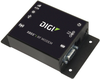
from Digi International, Inc.
Digi's XBee-PRO 900HP RF modems can be configured in minutes to provide reliable serial cable replacement between many different types of electronic devices. These modems utilize the XBee-PRO 900HP 900 MHz RF Module in an enclosure with interface options that include RS-232, RS-485, USB and Ethernet... [See More]
- Operating Mode: Point-to-Point; Point-to-Multipoint
- Modem Type: Radio Modem
- Network Media: Wireless
- Output Power: 251