
Circular Polarizer Optical Polarizers
Last Updated: April 1, 2025
Description
Circular polarizers are optical devices designed to control the polarization state of light. They consist of a combination of a linear polarizer and a quarter-wave retarder, which work together to transform unpolarized light into circularly polarized light. This transformation allows the polarizer to effectively manage light transmission and reflection, enhancing contrast and reducing glare.
Working Principle
Circular polarizers operate by first passing unpolarized light through a linear polarizer, which polarizes the light at a specific angle. This polarized light then enters a quarter-wave retarder, where its oscillation direction is altered to move in a helical pattern. When this light reflects off a surface, the sense of rotation reverses, and upon passing back through the retarder, it becomes linearly polarized in a plane perpendicular to its original polarization. This change allows the circular polarizer to block certain light waves, acting as a light valve and providing significant contrast enhancement .
Applications
Circular polarizers are widely used in various applications where glare reduction and contrast enhancement are crucial. They are particularly beneficial in camera, video, and sensor applications, where devices are sensitive to linearly polarized light. Additionally, circular polarizers improve the viewability of emissive displays and are employed in 3D applications .
Advantages over other Optical Polarizers
Circular polarizers offer the unique advantage of acting as a light valve, completely blocking unwanted light and providing superior contrast enhancement compared to other polarizers. This makes them particularly effective in applications requiring precise control over light transmission and reflection .
Limitations
One of the primary limitations of circular polarizers, especially those made from polymer materials, is their fragility and poor thermal performance. These polarizers can be damaged by excessive light exposure, and the polymer may decompose when exposed to laser light .
Considerations
When selecting circular polarizers, several factors should be considered, including initial costs, operating expenses, durability, and maintenance. Polymer-based circular polarizers are generally less expensive but may require more frequent replacement due to their fragility. Additionally, their thermal performance should be evaluated based on the intended application to ensure longevity and reliability.
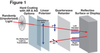
from Dontech Incorporated
Circular polarizers (CPs) are used to enhance the readability of emissive displays by suppressing internal reflections (by up to 99%) and improving the display ’s contrast. Circular polarizers are typically produced by the lamination of several different materials including a linear polarizer... [See More]
- Optical Polarizer: Circular Polarizer
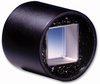
from Qioptiq
Composed of a symmetric arrangement of three air-spaced (uncemented) calcite prisms. Extremely large extinction ratios. Large angular fields of view. Mounted, fits to Microbench. Transmits over the range 250 - 2300 nm. Length / aperture ratio = 1.8. Uncoated [See More]
- Optical Polarizer: Circular Polarizer
- Wavelength Range: 250 to 2300
- Polarizer Application: Infrared; Visible; Ultraviolet
- Clear Aperture: 12

from American Polarizers, Inc.
API manufactures linear and circular polarizers for a wide range of 3D projection systems. Our polarizer filters are superior in clarity and resolution. Our 3-D linear polarizer and circular polarizer filters are available in the following substrates: * Acrylic (No coatings) * Glass (Anti-reflective... [See More]
- Optical Polarizer: Circular Polarizer
- Transmittance: 80
- Extinction Ratio: 5.10E-4
- Operating Temperature: -50 to 70

from Knight Optical (UK) Ltd
Linear sheet polarisers are used for a broad range of applications including the production of LCD monitors and TVs, photography and other lighting and entertainment systems such as projectors. Knight Optical supply linear sheet type polarisers in a range of types. These sheet polarisers were... [See More]
- Optical Polarizer: Circular Polarizer

from Qioptiq
Composed of two cemented calcite prisms with their optical axes aligned parallel to their hypotenuse faces. Extremely large extinction ratios. Angular fields are larger than those of Glan-Taylor prisms. Angular field symmetric about prism assembly axis. Virtually no deviation of extraordinary ray. [See More]
- Optical Polarizer: Circular Polarizer
- Wavelength Range: 350 to 2300
- Polarizer Application: Infrared; Visible; Ultraviolet
- Clear Aperture: 8

from American Polarizers, Inc.
Circular polarizers are used to improve the viewability of emissive displays. In bright light environments, Electroluminescent (EL), Field Emissive Displays (FED), Cathode Ray Tube (CRT), Light Emitting Diode (LED) and Organic Light Emitting Diode (OLED) benefit greatly from the use of a circular... [See More]
- Optical Polarizer: Circular Polarizer
- Extinction Ratio: 0.0060
- Polarizer Application: Visible
- Transmittance: 22
from Knight Optical (UK) Ltd
The HR polarizers are from the former Polaroid/3M range. Original HNPB polarizers are now obsolete however we supply a similar replacement that works extremely efficiently into the UV wavelength at 290nm. Knight Optical's UV and IR polarizers extend the spectral range down to 290m for the HNPB... [See More]
- Optical Polarizer: Circular Polarizer
- Wavelength Range: 280 to 450

from Qioptiq
Thin sheet polarizer without plastic protective film, directly cemented between plano cover glass. Ideal for stress analysis and polarimetry. Sizable free aperture. Linear polarizing. Glass filter. Mean transmittance of single filter for unpolarized white light ≈ 42 %. Resultant transmittance... [See More]
- Optical Polarizer: Circular Polarizer; Linear Polarizer
- Extinction Ratio: 3500
- Clear Aperture: 78
- Transmittance: 42
from Knight Optical (UK) Ltd
Mica retarders present a cost effective alternative to traditional quartz types and benefit from being moderately achromatic. Mica retarders are made from thin layers of weakly birefringent mica held between two glass plates for ease of handling. The thickness of the mica correlates to the operating... [See More]
- Optical Polarizer: Circular Polarizer
- Wavelength Range: 488