
60-40 Scratch / Dig Optical Polarizers
Last Updated: April 1, 2025
Description
60-40 Scratch / Dig Optical Polarizers are specialized optical components designed to manipulate the polarization state of light. These polarizers are characterized by their surface quality, indicated by the "60-40" scratch/dig specification, which refers to the allowable imperfections on the surface of the optical element. This specification ensures a certain level of optical clarity and performance, making them suitable for precise optical applications.
Working Principle
Optical polarizers, including those with a 60-40 scratch/dig specification, operate by selectively transmitting light of a specific polarization while blocking or reflecting other polarizations. This is achieved through various mechanisms depending on the type of polarizer. For example, birefringent polarizers use materials with different refractive indices for different polarizations, allowing them to separate and manipulate light effectively. This ability to control light polarization is crucial in reducing glare, enhancing contrast, and improving image quality in various optical systems.
Applications
60-40 Scratch / Dig Optical Polarizers are used in a wide range of applications where precise control of light polarization is required. Specific examples include:
- Photography: To reduce glare and enhance image contrast.
- Scientific Instruments: In spectrometers and microscopes to improve measurement accuracy.
- LCD Displays: To enhance display quality by controlling light transmission and reflection.
Advantages over other Optical Polarizers
One of the main advantages of 60-40 Scratch / Dig Optical Polarizers is their high surface quality, which ensures minimal optical distortion and high performance in demanding applications. This makes them preferable in situations where optical clarity and precision are critical, such as in high-resolution imaging systems and advanced scientific instruments.
Limitations
Despite their advantages, 60-40 Scratch / Dig Optical Polarizers may have limitations, such as higher costs due to the stringent manufacturing processes required to achieve the specified surface quality. Additionally, they may be more susceptible to damage from environmental factors if not properly handled and maintained.
Considerations
When selecting 60-40 Scratch / Dig Optical Polarizers, several factors should be considered:
- Initial Costs: These polarizers may have higher upfront costs due to their precise manufacturing requirements.
- Operating Expense: Maintenance and replacement costs should be factored in, especially in environments where the polarizers are exposed to harsh conditions.
- Durability: While they offer high optical performance, their durability can be compromised if not handled with care.
- Accuracy: The high surface quality ensures excellent optical performance, making them suitable for applications requiring high precision.
- Replacement and Maintenance Costs: Regular maintenance may be necessary to preserve their optical quality, and replacement costs can be significant if the polarizers are damaged.

from CASTECH, Inc.
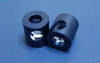
Introduction: Non-Polarizing Beamsplitters divide incident beam into a specific percentage without altering the S and P-polarization state. CASTECH offers a variety of Non-Polarizing Beamsplitters in configuration including UV Laser Line Non-Polarizing Beamsplitter Cubes, Laser Line Non-Polarizing... [See More]
- Surface Quality: 60-40 Scratch / Dig
- Polarizer Application: Ultraviolet
- Optical Polarizer: Beam Splitter
- Beam Deviation: 5
from CASTECH, Inc.
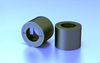
• High Polarization Purity. • Wide Wavelength Range. • High UV Transmission. • Available with two, one or no escape ports for extra power capacity. • Suitable for high power applications [See More]
- Surface Quality: 60-40 Scratch / Dig
- Wavelength Range: 350 to 2300
- Optical Polarizer: Calcite Polarizer
- Clear Aperture: 10
from CASTECH, Inc.
• Large Acceptance Angle: Special design for the ratio of l/A (length/aperture) guarantees the wide acceptance angle. • High Polarization Purity. • Suitable for low power applications. [See More]
- Surface Quality: 60-40 Scratch / Dig
- Wavelength Range: 350 to 2300
- Optical Polarizer: Calcite Polarizer
- Clear Aperture: 8

from CASTECH, Inc.
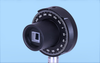
• Wide Wavelength Range. • Large Field Angle. • High Extinction Ratio. • Guarantee a wide transmission range, especially, suitable for UV applications. • Split the ordinary and extraordinary ray, but only extraordinary beam is deviated. [See More]
- Surface Quality: 60-40 Scratch / Dig
- Wavelength Range: 220 to 900
- Optical Polarizer: Calcite Polarizer
- Clear Aperture: 8
from CASTECH, Inc.
• Wide Wavelength Range. • Both ordinary and extraordinary beams are deviated. • Suitable for low power application and where the large deviations is required. [See More]
- Surface Quality: 60-40 Scratch / Dig
- Wavelength Range: 350 to 2300
- Optical Polarizer: Calcite Polarizer
- Clear Aperture: 10
from Foctek Photonics, Inc.
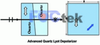
This DAQ series of depolarizers is an improved Quartz Lyot Depolarizer, which consists of two quartz crystal wedges with their optic axes lying in the plane of the plates, and aligned at 45 ° with each other. Is has the advantages of both Lyot and Wedge Depolarizer. One plate of the two... [See More]
- Surface Quality: 60-40 Scratch / Dig
- Wavelength Range: 220 to 2600
- Optical Polarizer: Depolarizer
- Clear Aperture: 9 to 25.4
from Foctek Photonics, Inc.
This DQW series of depolarizer consists of a crystalline quartz wedge together with a compensating fused silica wedge to correct the angular deviation. The optic axis of the quartz wedge lies in the plane of the wedge and at 45 deg to the input polarization. The result is then a variable... [See More]
- Surface Quality: 60-40 Scratch / Dig
- Polarizer Application: Infrared; Visible; Ultraviolet
- Optical Polarizer: Depolarizer
- Wavelength Range: 220 to 2600