
Ultraviolet Optical Polarizers
Last Updated: April 1, 2025
Description
Ultraviolet Optical Polarizers are specialized optical components designed to manipulate light within the ultraviolet (UV) spectrum, which ranges from 4 nm to 380 nm. These polarizers selectively transmit light of a specific polarization while blocking or reflecting other polarizations, effectively controlling the polarization state of UV light.
Working Principle
Ultraviolet Optical Polarizers operate based on the principles of birefringence and dichroism. Birefringent polarizers utilize materials with different refractive indices for different polarizations, allowing them to separate and manipulate the polarization states of light. Dichroic polarizers, on the other hand, absorb light of one polarization while allowing the orthogonal polarization to pass through. These mechanisms enable the polarizers to effectively manage the polarization of UV light, which is crucial for various optical applications.
Applications
Ultraviolet Optical Polarizers are used in a variety of specialized applications. They are essential in scientific instruments that require precise control of UV light, such as spectrometers and microscopes. In the field of photography, they help reduce glare and enhance contrast in UV imaging. Additionally, these polarizers are employed in the development of optical instruments and devices that operate within the UV spectrum, providing critical functionality in research and industrial settings.
Advantages over other Optical Polarizers
Ultraviolet Optical Polarizers offer specific advantages when dealing with UV light compared to other types of polarizers. Their ability to operate effectively within the UV spectrum makes them indispensable for applications requiring precise UV light manipulation. Unlike some visible light polarizers, UV polarizers are specifically designed to handle the shorter wavelengths of UV light, providing superior performance in UV-specific applications.
Limitations
One limitation of Ultraviolet Optical Polarizers is their sensitivity to environmental conditions, such as temperature and humidity, which can affect their performance. Additionally, the materials used in these polarizers may have limited durability when exposed to intense UV radiation over extended periods, potentially leading to degradation.
Considerations
When selecting Ultraviolet Optical Polarizers, several factors should be considered. Initial costs can vary depending on the quality and specifications of the polarizer. Operating expenses may include maintenance and potential replacement costs due to wear from UV exposure. Durability is a critical factor, as the polarizer must withstand the specific conditions of its intended application. Accuracy in polarization control is essential for achieving the desired outcomes in precision applications. Regular maintenance and careful handling can help extend the lifespan of these components, ensuring reliable performance.

from CASTECH, Inc.
Polarizing Beamsplitters divide unpolarized beam into two orthogonal, linearly polarized parts. A wide variety of Polarizing Beamsplitters configurations are offered by CASTECH, including UV Laser Line Polarizing Beamsplitter Cubes, Laser Line Polarizing Beamsplitter Cubes, Broadband Polarizing... [See More]
- Polarizer Application: Ultraviolet
- Polarizer Features: Anti-Reflection Coating
- Optical Polarizer: Beam Splitter
- Surface Flatness: λ/10

from Electro Optical Components, Inc.
Glan-Thompson cemented prism polarizers of calcite give the largest aperture field angle product of all calcite polarizer designs and the lowest transmission losses. The cemented interface, however, prevents their use with high power lasers. Applications include spectral polarimetry and general... [See More]
- Polarizer Application: Infrared; Visible; Ultraviolet
- Wavelength Range: 250 to 2300
- Optical Polarizer: Calcite Polarizer
- Clear Aperture: 10 to 20
from CeNing Optics Co., Ltd.
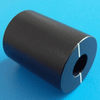
A polarizer is a device that produces linearly polarized light from other states of polarization. Glan-Taylor polarizer consists two calcite prisms which are separated by an air space. Glan-Taylor polarizers will divide an entering unpolarized beam into two rays; one is the extraordinary ray that is... [See More]
- Polarizer Application: Infrared; Visible; Ultraviolet
- Wavelength Range: 190 to 4000
- Optical Polarizer: Calcite Polarizer; Linear Polarizer
- Clear Aperture: 6 to 10

from CASTECH, Inc.
Introduction: Non-Polarizing Beamsplitters divide incident beam into a specific percentage without altering the S and P-polarization state. CASTECH offers a variety of Non-Polarizing Beamsplitters in configuration including UV Laser Line Non-Polarizing Beamsplitter Cubes, Laser Line Non-Polarizing... [See More]
- Polarizer Application: Ultraviolet
- Beam Deviation: 5
- Optical Polarizer: Beam Splitter
- Polarizer Features: Anti-Reflection Coating

from Electro Optical Components, Inc.
These retardation plates use high optical damage threshold crystal quartz. They are orientated with the optic axis in the plane of the plate and light polarized at 45 ° to the quartz optic axis is resolved into two equal amplitude components that suffer a relative phase retardation due to their... [See More]
- Polarizer Application: Infrared; Visible; Ultraviolet
- Wavelength Range: 220 to 2800
- Optical Polarizer: Waveplate / Retardation Plate
- Clear Aperture: 10 to 30
from CeNing Optics Co., Ltd.
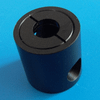
Glan-Taylor Polarizers are also called Glan laser polarizers. The polarizers are specially designed for high energy applications. The housing sides are drilled with two holes. An ordinary ray is reflected through at an angle and exits the polarizers through one of the holes. [See More]
- Polarizer Application: Infrared; Visible; Ultraviolet
- Wavelength Range: 190 to 3500
- Optical Polarizer: Calcite Polarizer; Linear Polarizer
- Clear Aperture: 6 to 15
from CASTECH, Inc.
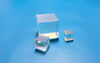
Polarizing Beamsplitters divide unpolarized beam into two orthogonal, linearly polarized parts. A wide variety of Polarizing Beamsplitters configurations are offered by CASTECH, including UV Laser Line Polarizing Beamsplitter Cubes, Laser Line Polarizing Beamsplitter Cubes, Broadband Polarizing... [See More]
- Polarizer Application: Ultraviolet
- Extinction Ratio: 500 to 1000
- Optical Polarizer: Beam Splitter
- Beam Deviation: 5

from Electro Optical Components, Inc.
Wollaston Type. Wollaston prism polarizing beam splitters consist of two equal angle calcite prisms optically coupled with optic axis orthogonally crossed to the direction of propagation. The beam separation of about 20 ° is then approximately balanced about the input beam axis. The transmission... [See More]
- Polarizer Application: Infrared; Visible; Ultraviolet
- Wavelength Range: 320 to 2500
- Optical Polarizer: Calcite Polarizer
- Clear Aperture: 10 to 20

from CeNing Optics Co., Ltd.
Rochon polarizers separate incident beams into ordinary rays and extraordinary rays, like a Wollaston polarizer, but the extraordinary ray is transmitted straight through, while the ordinary ray is transmitted with a deviation angle. [See More]
- Polarizer Application: Infrared; Visible; Ultraviolet
- Wavelength Range: 190 to 4000
- Optical Polarizer: Linear Polarizer
- Clear Aperture: 8 to 15

from CASTECH, Inc.
Non-Polarizing Beamsplitters divide incident beam into a specific percentage without altering the S and P-polarization state. CASTECH offers a variety of Non-Polarizing Beamsplitters in configuration including UV Laser Line Non-Polarizing Beamsplitter Cubes, Laser Line Non-Polarizing Beamsplitter... [See More]
- Polarizer Application: Ultraviolet
- Beam Deviation: 5
- Optical Polarizer: Beam Splitter
- Polarizer Features: Anti-Reflection Coating

from CeNing Optics Co., Ltd.
Wollaston polarizers can separate an incident beam into two rays - extraordinary and ordinary - with a deviation angle that is dependent on wavelength. Both rays are transmitted through the other surface. [See More]
- Polarizer Application: Infrared; Visible; Ultraviolet
- Wavelength Range: 190 to 4000
- Optical Polarizer: Calcite Polarizer; Linear Polarizer
- Clear Aperture: 8 to 15

from CASTECH, Inc.
Introduction: Non-Polarizing Beamsplitters divide incident beam into a specific percentage without altering the S and P-polarization state. CASTECH offers a variety of Non-Polarizing Beamsplitters in configuration including UV Laser Line Non-Polarizing Beamsplitter Cubes, Laser Line Non-Polarizing... [See More]
- Polarizer Application: Ultraviolet
- Polarizer Features: Anti-Reflection Coating
- Optical Polarizer: Beam Splitter
- Surface Quality: 20-10 Scratch / Dig

from CASTECH, Inc.
Polarizing Beamsplitters divide unpolarized beam into two orthogonal, linearly polarized parts. A wide variety of Polarizing Beamsplitters configurations are offered by CASTECH, including UV Laser Line Polarizing Beamsplitter Cubes, Laser Line Polarizing Beamsplitter Cubes, Broadband Polarizing... [See More]
- Polarizer Application: Ultraviolet
- Extinction Ratio: 100
- Optical Polarizer: Beam Splitter
- Beam Deviation: 5

from CASTECH, Inc.
Introduction: Polarizing Beamsplitters divide unpolarized beam into two orthogonal, linearly polarized parts. A wide variety of Polarizing Beamsplitters configurations are offered by CASTECH, including UV Laser Line Polarizing Beamsplitter Cubes, Laser Line Polarizing Beamsplitter Cubes, Broadband... [See More]
- Polarizer Application: Ultraviolet
- Extinction Ratio: 500 to 1000
- Optical Polarizer: Beam Splitter
- Beam Deviation: 5
from Qioptiq
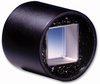
Composed of a symmetric arrangement of three air-spaced (uncemented) calcite prisms. Extremely large extinction ratios. Large angular fields of view. Mounted, fits to Microbench. Transmits over the range 250 - 2300 nm. Length / aperture ratio = 1.8. Uncoated [See More]
- Polarizer Application: Infrared; Visible; Ultraviolet
- Wavelength Range: 250 to 2300
- Optical Polarizer: Circular Polarizer
- Clear Aperture: 12
from Ross Optical Industries
This polarizer is a variation of the Glan-Taylor polarizer with a steep angle for the cut in the prism, which reduces reflection loss at the expense of decreased field of view. It is specially designed and manufactured for high energy application such as laser system. The optical materials exhibit... [See More]
- Polarizer Application: Infrared; Visible; Ultraviolet
- Wavelength Range: 200 to 270
- Optical Polarizer: Calcite Polarizer; Laser Polarizer
- Extinction Ratio: 5.00E-6
from Rainbow Research Optics, Inc.
Your One-Stop Source for Polarizer Optics. From prototype to production, Rainbow Research Optics, Inc. (RROI) manufactures and delivers precision grade and commercial quality polarizer optics and beamsplitters to address applications in the ultraviolet (UV), visible (VIS), and infrared (IR)... [See More]
- Polarizer Application: Infrared; Visible; Ultraviolet
- Polarizer Features: Anti-Reflection Coating
- Optical Polarizer: Waveplate / Retardation Plate
- Surface Quality: 10-5 Scratch / Dig; 20-10 Scratch / Dig
from MOXTEK, Inc.
Pixelated Polarizers. Moxtek ® has added versatility to polarization applications with development of Pixelated polarizers, designed using Moxtek Nanowire ® Technology. These patterned polarizers are available as two, three and four-state devices for polarimetric imaging. Polarization helps... [See More]
- Polarizer Application: Infrared; Visible; Ultraviolet
- Wavelength Range: 300 to 5000
- Optical Polarizer: Linear Polarizer
from Foctek Photonics, Inc.
The low(multiple) order waveplate is designed to give a retardance of several full waves, plus the desired fraction. This result in a single, physically robust component with desired performance. However, even small changed in wavelength or temperature will result in significant changes in the... [See More]
- Polarizer Application: Infrared; Visible; Ultraviolet
- Wavelength Range: 266 to 1550
- Optical Polarizer: Waveplate / Retardation Plate
- Polarizer Features: Anti-Reflection Coating

from American Polarizers, Inc.
In conjunction with Bolder Vision Optik, API is very pleased to offer an Ultraviolet (UV) linear polarizer. Composed of a dichroic UV polarizer sandwiched between fused silica, the APUV ultraviolet linear polarizer is an excellent choice for your polarization needs. The effective UV range is from... [See More]
- Polarizer Application: Ultraviolet
- Wavelength Range: 320 to 420
- Optical Polarizer: Linear Polarizer
- Extinction Ratio: 8.00E-4

from Qioptiq
Composed of two cemented calcite prisms with their optical axes aligned parallel to their hypotenuse faces. Extremely large extinction ratios. Angular fields are larger than those of Glan-Taylor prisms. Angular field symmetric about prism assembly axis. Virtually no deviation of extraordinary ray. [See More]
- Polarizer Application: Infrared; Visible; Ultraviolet
- Wavelength Range: 350 to 2300
- Optical Polarizer: Circular Polarizer
- Clear Aperture: 8
from Ross Optical Industries
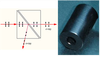
A Glan-Taylor polarizer produces linearly polarized light. It ’s made of a pair of right angle prisms which are separated on their hypotenuses with an air gap. The optical axes of the optical crystals are aligned parallel to the plane of reflection. S-polarized light encounters a total... [See More]
- Polarizer Application: Infrared; Visible; Ultraviolet
- Wavelength Range: 200 to 270
- Optical Polarizer: Calcite Polarizer; Linear Polarizer
- Extinction Ratio: 5.00E-6
from MOXTEK, Inc.
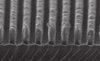
Ultra Broadband polarizer ’s are designed to offer an excellent solution for almost any multi-wavelength application. The wide-band characteristics of this polarizer, enables a wide range of products and technologies. Performance begins at 300nm and works well throughout the visible and... [See More]
- Polarizer Application: Infrared; Visible; Ultraviolet
- Wavelength Range: 300 to 4000
- Optical Polarizer: Linear Polarizer
- Polarizer Features: Broadband
from Foctek Photonics, Inc.
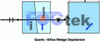
This DQW series of depolarizer consists of a crystalline quartz wedge together with a compensating fused silica wedge to correct the angular deviation. The optic axis of the quartz wedge lies in the plane of the wedge and at 45 deg to the input polarization. The result is then a variable... [See More]
- Polarizer Application: Infrared; Visible; Ultraviolet
- Wavelength Range: 220 to 2600
- Optical Polarizer: Depolarizer
- Clear Aperture: 9 to 25.4
from Qioptiq
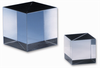
These polarizing beamsplitter cubes are derived from a unique combination of Ion-Beam-Sputtering coatings, ultraprecise fabrication capabilities and the patent-pending, epoxy-free bonding technology -Chemically Activated Direct Bonding ™ which results in a zero-bondline thickness. Optical... [See More]
- Polarizer Application: Infrared; Visible; Ultraviolet
- Extinction Ratio: 500 to 1000
- Wavelength Range: 355 to 1064
- Transmittance: 95
from Ross Optical Industries
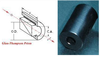
This type of polarizer is made of two cemented right angle prisms. The s-polarized extraordinary beam is transmitted while the ordinary beam is reflected. The prisms provide larger field of view than the Glan-Taylor type. [See More]
- Polarizer Application: Infrared; Visible; Ultraviolet
- Wavelength Range: 200 to 3500
- Optical Polarizer: Calcite Polarizer; Linear Polarizer
- Extinction Ratio: 5.00E-6
from MOXTEK, Inc.
ProFlux ® Nanowire ® Ultraviolet polarizers offer excellent solutions for UV and DUV applications. High transmission and high contrast choices are available. The high transmission products are indicated by UTV and the high contrast products are indicated by UVD. Durability is equivalent to... [See More]
- Polarizer Application: Ultraviolet
- Wavelength Range: 260 to 400
- Optical Polarizer: Linear Polarizer
- Polarizer Features: Anti-Reflection Coating (optional feature); Broadband

from Foctek Photonics, Inc.
This useful instrument introduces a variable rotation between 0 ° and 90 ° to an input plane polarized beam. The rotation angle is controlled by a manually driven precision micrometer. Calibration scales are supplied to enable any desired rotation to be set for a given wavelength of... [See More]
- Polarizer Application: Infrared; Visible; Ultraviolet
- Wavelength Range: 230 to 1100
- Optical Polarizer: Polarization Rotator
- Clear Aperture: 10
from Ross Optical Industries
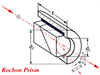
A Rochon polarizer separates incident beams into ordinary and extraordinary like some other polarizers; however the p-polarization is transmitted straight through while the s-polarization is transmitted with a deviation angle. [See More]
- Polarizer Application: Infrared; Visible; Ultraviolet
- Wavelength Range: 190 to 3500
- Optical Polarizer: Calcite Polarizer; Rochon
- Extinction Ratio: 5.00E-6
from Ross Optical Industries
A Wollaston polarizer has wider field of view than other birefringent polarizers. The two prisms are cemented together. Both ordinary and extraordinary beams transmit through the prism, however, at a deviation angle of 15 ° to 45 ° depending on the wavelength. [See More]
- Polarizer Application: Infrared; Visible; Ultraviolet
- Wavelength Range: 190 to 3500
- Optical Polarizer: Calcite Polarizer; Bi-refingent
- Extinction Ratio: 5.00E-6
from Ross Optical Industries
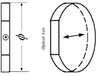
The low (multiple) order waveplate is designed to give a retardance of several full waves, plus the desired fraction. This results in a single, physically robust component with desired performance. However, even small changes in wavelength or temperature will result in significant changes in the... [See More]
- Polarizer Application: Infrared; Visible; Ultraviolet
- Wavelength Range: 266 to 1550
- Optical Polarizer: Waveplate / Retardation Plate
- Beam Deviation: 1
from Ross Optical Industries
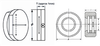
The zero order waveplate is designed to give a retardance of zero full waves, plus the desired fraction. Zero Order Waveplates show better performance than multiple order waveplates. They show a broader bandwidth and a lower sensitivity to temperature and wavelength changes and should be considered... [See More]
- Polarizer Application: Infrared; Visible; Ultraviolet
- Wavelength Range: 266 to 1550
- Optical Polarizer: Waveplate / Retardation Plate
- Beam Deviation: 1