
λ/8 Optical Polarizers
Last Updated: April 1, 2025
Description
?/8 Optical Polarizers are specialized optical components designed to manipulate the polarization state of light. They are used to control the orientation of light waves, allowing only specific polarizations to pass through while blocking others. This selective transmission of light based on polarization is crucial in various optical systems.
Working Principle
?/8 Optical Polarizers operate by utilizing the principles of birefringence and phase retardation. Birefringent materials have different refractive indices for different polarizations of light, which allows them to separate and manipulate these polarizations effectively. In the case of ?/8 polarizers, the optical path difference introduced between the fast and slow axes of the birefringent material is one-eighth of the wavelength of the light. This phase shift is used to alter the polarization state of the light, making these polarizers particularly useful for fine-tuning polarization in precision optical applications.
Applications
?/8 Optical Polarizers are employed in a variety of applications where precise control of light polarization is required. They are commonly used in scientific research, particularly in experiments involving light-matter interactions where specific polarization states are necessary. Additionally, they find applications in advanced imaging systems, telecommunications, and laser optics, where controlling the polarization can enhance system performance and accuracy.
Advantages over other Optical Polarizers
One of the key advantages of ?/8 Optical Polarizers is their ability to provide fine control over the polarization state with minimal loss of light intensity. This makes them superior in applications where maintaining light intensity is critical. Additionally, their precise phase retardation capability allows for more accurate manipulation of polarization compared to other types of polarizers, such as linear or circular polarizers, which may not offer the same level of precision.
Limitations
Despite their advantages, ?/8 Optical Polarizers have limitations. They can be more expensive than other types of polarizers due to the complexity of their design and the materials used. Additionally, their performance can be sensitive to wavelength changes, which may require careful calibration and adjustment in systems where multiple wavelengths are used.
Considerations
When considering the use of ?/8 Optical Polarizers, it is important to evaluate the initial costs, which can be higher compared to simpler polarizers. Operating expenses may also be influenced by the need for precise alignment and calibration to maintain accuracy. Durability is generally high, but the specific materials used can affect the polarizer's lifespan and resistance to environmental factors. Maintenance costs should also be considered, as regular checks and potential replacements may be necessary to ensure optimal performance over time.
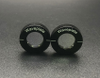
from CRYSTECH, Inc.
CRYSTECH is dedicated to manufacturing high precision waveplate for solid-state laser systems. CRYSTECH offers quarter- and half-wave plates in a variety of options including Multiple Order Waveplates, Optical Cemented Zero-Order Waveplates, Air-paced Zero-Order Waveplates, True Zero-Order... [See More]
- Surface Flatness: λ/8
- Surface Quality: 20-10 Scratch / Dig
- Optical Polarizer: Waveplate / Retardation Plate
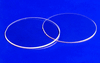
from CeNing Optics Co., Ltd.
Multiple order waveplates are made from a single crystalline plate, which are designed to give a retardance of several full waves, plus the desired fraction. Multiple order waveplates are more susceptible to change in wavelength and they should not be used more than several nanometers outside of... [See More]
- Surface Flatness: λ/8
- Polarizer Application: Infrared; Visible
- Optical Polarizer: Waveplate / Retardation Plate
- Polarizer Features: Anti-Reflection Coating

from Electro Optical Components, Inc.
Glan-Thompson cemented prism polarizers of calcite give the largest aperture field angle product of all calcite polarizer designs and the lowest transmission losses. The cemented interface, however, prevents their use with high power lasers. Applications include spectral polarimetry and general... [See More]
- Surface Flatness: λ/8
- Polarizer Application: Infrared; Visible; Ultraviolet
- Optical Polarizer: Calcite Polarizer
- Wavelength Range: 250 to 2300

from CASTECH, Inc.
Feature: • Excellent optical performance; • All kinds of coatings are available; • Custom designs for other sizes and coatings are also available upon request; • Left-handed polarization rotator is also available. [See More]
- Surface Flatness: λ/8
- Wavelength Range: 440 to 1600
- Optical Polarizer: Polarization Rotator
- Surface Quality: 20-10 Scratch / Dig

from CASTECH, Inc.
• Custom designs for other sizes and coatings are also available upon request. • CASTECH's standard coatings are available. [See More]
- Surface Flatness: λ/8
- Surface Quality: 20-10 Scratch / Dig
- Optical Polarizer: Waveplate / Retardation Plate
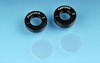
from CASTECH, Inc.
• Custom designs for other sizes, coatings and holder are also available upon request. • CASTECH's standard coatings are available. [See More]
- Surface Flatness: λ/8
- Surface Quality: 20-10 Scratch / Dig
- Optical Polarizer: Waveplate / Retardation Plate

from Artifex Engineering
Low cost waveplate, sensitive to variations in wavelength and temperature. The low (multiple) order waveplate is designed to give a retardance of several full waves, plus the desired fraction. This results in a single, physically robust component with desired performance. However, even small... [See More]
- Surface Flatness: λ/8
- Polarizer Application: Infrared (optional feature); Visible (optional feature); Ultraviolet (optional feature)
- Optical Polarizer: Waveplate / Retardation Plate
- Wavelength Range: 266 to 1550
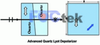
from Foctek Photonics, Inc.
This DAQ series of depolarizers is an improved Quartz Lyot Depolarizer, which consists of two quartz crystal wedges with their optic axes lying in the plane of the plates, and aligned at 45 ° with each other. Is has the advantages of both Lyot and Wedge Depolarizer. One plate of the two... [See More]
- Surface Flatness: λ/8
- Wavelength Range: 220 to 2600
- Optical Polarizer: Depolarizer
- Clear Aperture: 9 to 25.4
from Daheng New Epoch Technology, Inc.
A Glan-Taylor prisms is an air-spaced prism, which is used as a polarizer or polarizing beam splitter. It is one of the most common types of modern polarizing prism. It was first described by Archard and Taylor in 1948. The prism is made of two right-angled prisms of (or sometimes other birefringent... [See More]
- Surface Flatness: λ/8
- Beam Deviation: 3
- Wavelength Range: 220 to 2500

from Artifex Engineering
High damage threshold, space saving polarizers. Particularly useful for Q-Switching. Our thin film polarizers are based on a coating made up of particular birefringent materials having polarizing properties while the coating is designed under Brewster angle. Brewster Angle: For light incident on a... [See More]
- Surface Flatness: λ/8
- Transmittance: 97
- Optical Polarizer: Linear Polarizer
- Polarizer Features: Anti-Reflection Coating
from Foctek Photonics, Inc.
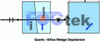
This DQW series of depolarizer consists of a crystalline quartz wedge together with a compensating fused silica wedge to correct the angular deviation. The optic axis of the quartz wedge lies in the plane of the wedge and at 45 deg to the input polarization. The result is then a variable... [See More]
- Surface Flatness: λ/8
- Polarizer Application: Infrared; Visible; Ultraviolet
- Optical Polarizer: Depolarizer
- Wavelength Range: 220 to 2600

from Artifex Engineering
Better performance than low or multiple order waveplates. The zero order waveplate is designed to give a retardance of zero full waves, plus the desired fraction. Zero order waveplate shows better performance than multiple order waveplates. It has broad bandwidth and a lower sensitivity to... [See More]
- Surface Flatness: λ/8
- Polarizer Application: Infrared (optional feature); Visible (optional feature); Ultraviolet (optional feature)
- Optical Polarizer: Waveplate / Retardation Plate
- Wavelength Range: 266 to 1550