
Sedimentation / Centrifugal Particle Analyzers
Last Updated: April 1, 2025
Description
Sedimentation and centrifugal particle analyzers are specialized instruments used to determine the size distribution of particles in a sample. These analyzers work by measuring the rate at which particles settle in a fluid, either under the influence of gravity or centrifugal force, to provide detailed information about particle size distribution.
Working Principle
The working principle of sedimentation and centrifugal particle analyzers is based on the sedimentation of particles in a fluid. According to Stokes' law, the time it takes for particles to settle a known distance in a fluid of known viscosity and density can be used to determine their size. In gravitational sedimentation, the process is limited to larger particles due to the slow settling rate of smaller particles and the interference of Brownian motion. Centrifugal sedimentation, on the other hand, applies a much greater force, allowing for the analysis of smaller particles by accelerating their settling process. This method is particularly useful for achieving high-resolution size distributions of microscopic to sub-microscopic particles, ranging from approximately 0.01 µm to 50 µm, and potentially extending beyond these limits for certain materials .
Applications
Sedimentation and centrifugal particle analyzers are traditionally used in industries such as paint and ceramics, where understanding particle size distribution is crucial for product quality and performance . They are also employed in the analysis of marine silts and sediments, where the deposition of solids is dependent on their sedimentation velocity in a liquid .
Advantages over other Particle Analyzers
One of the primary advantages of sedimentation and centrifugal particle analyzers is their ability to produce extremely high-resolution size distributions, especially for small particles. This capability is particularly beneficial when analyzing materials that require precise size characterization, such as those used in advanced manufacturing processes .
Limitations
These analyzers have a limited range and are not well-suited for emulsions where the material does not settle or for very dense materials that settle too quickly . Additionally, gravitational sedimentation is generally restricted to larger particles due to the slow settling rates of smaller particles and the effects of Brownian motion .
Considerations
When considering the use of sedimentation and centrifugal particle analyzers, it is important to evaluate factors such as initial costs, operating expenses, and maintenance requirements. The durability and accuracy of the equipment are also critical considerations, as they can impact the long-term reliability and precision of particle size measurements. Replacement and maintenance costs should be factored into the overall cost of ownership to ensure that the analyzer remains a cost-effective solution for particle analysis needs.
from KANOMAX USA, INC.
0.01 -100 Femto-gram aerosol particles can be classified, power supply:100V [See More]
- Technology: Sedimentation; Centrifugal/Electrostatic Balance Tech.
- Sample Type: Powder / Solid
- Measurement Type: Size
- Measuring Range: 0.0400 to 0.5000
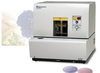
from Micromeritics
The new SediGraph ® III 5120 determines particle size by using the highly accurate and reproducible sedimentation technique which measures the gravity-induced settling rates of different size particles in a liquid with known properties. This is simple yet extremely effective technique for... [See More]
- Technology: Sedimentation
- Sample Type: Emulsion
- Measurement Type: Size
- Measuring Range: 0.1000 to 300