
Blockage / Attenuation Particle Analyzers
Last Updated: April 1, 2025
Description
Blockage or attenuation particle analyzers are instruments designed to measure the concentration and size distribution of particles within a sample. They achieve this by detecting the reduction in transmission of light, radiation, or electrical fields caused by particles present in the sample.
Working Principle
Blockage or attenuation particle analyzers operate by passing a sample between a light source, such as a laser, and a detector. As particles in the sample block or attenuate the light, the shadows cast on the detector are measured. This change in light transmission is used to determine the size and concentration of the particles. These analyzers are particularly useful because they provide a non-destructive and non-intrusive method of particle analysis, making them suitable for a wide range of applications.
Applications
Blockage or attenuation particle analyzers are commonly used in oil analysis systems, such as the Spectro Scientific MicroLab 40 and the Q5800 Expeditionary Fluid Analysis System. These systems are employed to monitor machinery health by analyzing ferrous debris in oil, which is indicative of wear and tear in mechanical systems.
Advantages over other Particle Analyzers
One of the primary advantages of blockage or attenuation particle analyzers is their ability to process samples containing soot or water without increasing signal output, unlike traditional pore blockage devices. This makes them particularly effective for analyzing heavily contaminated samples, where other techniques might struggle.
Limitations
Traditional light blockage particle counters have limitations, including measurement errors caused by the presence of water and air bubbles within the sample. These errors can be mitigated by using ultrasonic agitation to reduce air bubbles and 'water stripping' solvents for water-containing samples. However, these additional steps can complicate the analysis process.
Considerations
When considering blockage or attenuation particle analyzers, it is important to evaluate factors such as initial costs, operating expenses, and maintenance requirements. While these analyzers offer high accuracy and durability, the presence of water and air bubbles in samples can affect accuracy, necessitating additional preparation steps. Replacement and maintenance costs should also be considered, as these can impact the overall cost-effectiveness of the analyzer.

from Teledyne Monitor Labs, Inc.
Meets All New PS-1 and ASTM D6216 Regulations. State-of-the-Art Utilizing Patented Electro-dynamic Pulsed LED Light Sources for Ultra Low Opacity Applications! ( <10% opacity). ETL/CE Certfied. Teledyne Monitor Labs. LightHawk ® Opacity/Dust Monitor offers advanced, patented and configurable... [See More]
- Technology: Light or Laser Blockage
- Sample Type: Aerosol Droplets (Liquid in Gas)
- Measurement Type: Specialty / Other; Particle Concentration
- Sample Temperature: -25 to 140

from Terra Universal, Inc.
Lightweight and compact portability allows measuring in hard-to-reach areas. Reliable solid-state laser sensor provides a long, trouble-free service life. Isokinetic probe is built into processor housing. Two available models, with sensitivity ranges of 0.3 µm to 5 µm or 0.5 µm to... [See More]
- Technology: Light or Laser Blockage
- Sample Type: Aerosol Droplets (Liquid in Gas)
- Measurement Type: Count
- Measuring Range: 0.3000 to ?
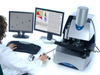
from Malvern Instruments, Inc.
The Morphologi G3 at a glance: Fully integrated dry powder disperser: A novel fully integrated dry powder dispersion system reduces sample preparation times and significantly improves the repeatability of measurements. Statistical significance: Analyze 100 ’s of thousands of particles with a... [See More]
- Technology: Light or Laser Blockage; Microscopy / Image Analysis
- Sample Type: Powder / Solid; Emulsion
- Measurement Type: Size; Shape; Count
- Measuring Range: 0.5000 to 3000