
Process Line Mounted (Continuous) Densometers and Porosimeters
Description
Process Line Mounted (Continuous) Densometers and Porosimeters are specialized instruments used to measure the air permeability and porosity of materials. A densometer determines the time required to force a known volume of air through a material, while a porosimeter measures the flow of air through a material in cubic feet per minute. These devices are crucial for assessing the characteristics of materials such as woven textiles, plastics, and other industrial fabrics.
Working Principle
Densometers operate by measuring the time it takes for a known volume of air to pass through a specific area of material, providing insights into the material's permeability. Porosimeters, on the other hand, measure the flow rate of air through a material, which helps in determining its porosity. These measurements are essential for understanding the material's ability to allow air or fluids to pass through, which is critical in various industrial applications. The use of mercury in porosimeters, although being replaced by oil-filled pressure densometers, allows for precise measurements of porosity and permeability under high-pressure conditions.
Applications
Densometers and porosimeters are widely used in industries that manufacture woven textiles and plastics, such as felt or other industrial fabrics. They are also employed in the oil and gas industries to test the porosity of petroleum reservoirs. In the pulp and paper industry, densometers are used to measure the porosity, air-permeability, or air resistance of materials like paper and textiles.
Advantages over other Densometers and Porosimeters
The continuous measurement capability of process line mounted densometers and porosimeters provides real-time data, which is advantageous for quality control in manufacturing processes. This continuous monitoring allows for immediate adjustments to be made, ensuring consistent product quality. Additionally, the replacement of mercury with oil in some densometers reduces environmental and health risks associated with mercury use.
Limitations
One limitation of these devices is the dependency on pressure for accurate measurements, particularly in mercury porosimeters, where the value obtained is pressure-dependent. This can complicate the interpretation of results and may require additional calibration or correction factors.
Considerations
When considering the use of process line mounted densometers and porosimeters, it is important to evaluate the initial costs, which can be significant due to the complexity and precision of the instruments. Operating expenses may also be high, particularly if the devices require frequent calibration or maintenance. Durability and accuracy are critical factors, as these instruments must withstand harsh industrial environments while providing precise measurements. Replacement and maintenance costs should also be considered, as they can impact the overall cost-effectiveness of the equipment.
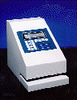
from Gurley Precision Instruments
Our flagship instrument. The Model 4340 combines the abilities of our textile, standard and high pressure Densometers, S-P-S Testers as well as our programmable digital timers and provides a reading in seconds, thus reducing the time required to test a material. By utilizing state-of-the-art mass... [See More]
- Display & Special Features: Digital; Process Line Mounted for Continuous Monitoring
- Test Media: Paper; Textiles
- Properties Analyzed: Densometry / Pore Size
- Methods, Technology & Standards: Mass flow and servo-regulator technology, automatic test feature, auto-drive mechanism

from Gurley Precision Instruments
Densometers are the accepted standard for measuring the porosity of materials such as papers, wovens, plastics and membranes. All Densometers measure the time required for a given volume and of air (25cc to 400cc) to flow through a standard area of material being tested under light uniform pressure. [See More]
- Display & Special Features: Digital; Process Line Mounted for Continuous Monitoring
- Test Media: Paper; Textiles
- Properties Analyzed: Densometry / Pore Size