
Powders / Granular Materials Densometers and Porosimeters
Description
Densometers and porosimeters are instruments used to measure the air permeability and porosity of materials. A densometer specifically measures the time it takes for a known volume of air to pass through a square inch of material, while a porosimeter measures the air flow in cubic feet per minute through a square foot of material. These devices are essential for assessing the permeability characteristics of various substances, particularly in industries dealing with woven textiles, plastics, and other industrial fabrics.
Working Principle
Densometers and porosimeters operate by evaluating how air flows through a material. A densometer forces a known volume of air through a material and measures the time taken for this process, which helps determine the material's permeability. On the other hand, a porosimeter measures the rate of air flow through the material, providing insights into its porosity. These measurements are crucial for understanding the material's structural properties and its suitability for specific applications. For instance, in the oil and gas industry, these devices can assess the porosity of petroleum reservoirs, which is vital for evaluating potential extraction efficiency.
Applications
Densometers and porosimeters find applications in various industries. In the textile industry, they are used to test the air permeability of breathable fabrics and absorbent materials like felt. In the oil and gas sector, these instruments are employed to evaluate the porosity of petroleum reservoirs, which is critical for determining the viability of extraction processes. Additionally, specialized devices like nuclear densometers are used in construction to test moisture levels in soil and can provide readings through multiple layers of asphalt.
Advantages over other Densometers and Porosimeters
A significant advantage of modern densometers and porosimeters is the replacement of older mercury-based models with newer oil-filled pressure densometers. This advancement reduces the environmental and health risks associated with mercury use. Moreover, the ability of nuclear densometers to measure moisture through multiple asphalt layers offers a unique capability not found in traditional densometers.
Limitations
One limitation of densometers and porosimeters is their dependency on the specific characteristics of the material being tested. For instance, materials with extremely low permeability may not provide accurate readings with standard densometers. Additionally, the use of specialized devices like nuclear densometers may require adherence to strict regulatory guidelines due to their radioactive components.
Considerations
When considering the use of densometers and porosimeters, several factors should be taken into account. Initial costs can vary significantly depending on the complexity and capabilities of the device. Operating expenses may include maintenance and calibration to ensure accuracy over time. Durability is another consideration, as devices used in harsh industrial environments may require more frequent servicing. Accuracy is paramount, especially in applications where precise permeability measurements are critical. Lastly, replacement and maintenance costs should be evaluated to ensure the long-term viability of the investment.

from Micromeritics
High Performance in a Compact Footprint. Accurate and precise surface area and porosimetry measurements are essential to the determination of the effectiveness and quality of a wide variety of materials. The Micromeritics ASAP 2020 integrates multiple gas sorption techniques into a single,... [See More]
- Test Media: Adhesives/Sealants; Ceramics; Chemicals; Food / Beverage; Metals; Powders; Catalyst
- Methods, Technology & Standards: Gas Sorption Technique
- Properties Analyzed: Porosimetry / Pore Volume
- Display & Special Features: Benchtop or Laboratory; PC Interface / Networkable
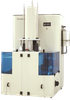
from Quantachrome Instruments
The PoreMaster ® GT Series —. fully automated, high-performance mercury porosimeters that offer two high-pressure and two low-pressure analysis ports to meet the pore size measurement needs of the busiest laboratories. In addition to "two samples in a single loading, " (patented)... [See More]
- Test Media: Powders; Powders, Bulk Solids
- Display & Special Features: Benchtop or Laboratory; PC Interface / Networkable; SPC Software or Capability
- Properties Analyzed: Densometry / Pore Size; Porosimetry / Pore Volume
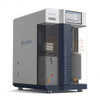
from CIQTEK Co., Ltd
EASY-V 1220 is the BET specific surface area and pore size analysis instrument developed independently by CIQTEK, using the static volumetric method. ▪ Specific surface area testing, range 0.0005 (m2/g) and above. ▪ Pore size analysis: 2 nm-500 nm. ▪ Two analysis stations,... [See More]
- Test Media: Powders; Battery Materials, Petrochemical Industry, Medicine, Environmental protection materials, Nanomaterials
- Properties Analyzed: Porosimetry / Pore Volume

from Micromeritics
Micromeritics ASAP ® 2420 Accelerated Surface Area and Porosimetry System uses the gas sorption technique to generate high-quality data for applications that require high performance/high sample throughput. Standard features include six independently operated analysis ports and a programmable... [See More]
- Test Media: Adhesives/Sealants; Ceramics; Chemicals; Food / Beverage; Geological (Rock, Strata, etc.); Metals; Powders; Catalyst
- Methods, Technology & Standards: Gas Sorption Technique
- Properties Analyzed: Porosimetry / Pore Volume
- Display & Special Features: Benchtop or Laboratory; PC Interface / Networkable
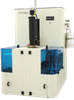
from Quantachrome Instruments
The PoreMaster series consists of three automatic mercury intrusion porosimeters offering new concepts in automated pore size analysis.The PoreMaster 33 porosimeter achieves a maximum pressure of 33,000 psia for pore size measurements in the range from over 1100* micron to 0.0064 micron pore... [See More]
- Test Media: Powders; Powders, Pellets, Bulk Solids
- Display & Special Features: Benchtop or Laboratory; PC Interface / Networkable; SPC Software or Capability; Video
- Properties Analyzed: Porosimetry / Pore Volume
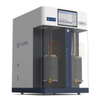
from CIQTEK Co., Ltd
EASY-V 1440 is the BET specific surface area and pore size analysis instrument developed independently by CIQTEK, using the static volumetric method. ▪ Specific surface area testing, range 0.0005 (m2/g) and above. ▪ Pore size analysis: 2 nm-500 nm. ▪ Four analysis stations,... [See More]
- Test Media: Powders; Battery Materials, Petrochemical Industry, Medicine, Environmental protection materials, Nanomaterials
- Properties Analyzed: Porosimetry / Pore Volume

from Micromeritics
The ASAP 2020 Plus Chemisorption option [ermits you to obtain valuable information about the physical and chemical properties of your catalyst, catalyst support, adsorbents, and other materials. It's unique design provides a high level of system cleanliness to permit low-pressure checmisorption... [See More]
- Test Media: Adhesives/Sealants; Ceramics; Food / Beverage; Powders; Catalyst
- Methods, Technology & Standards: Multiple Gas Sorbtion Techniques
- Properties Analyzed: Porosimetry / Pore Volume
- Display & Special Features: Benchtop or Laboratory; PC Interface / Networkable

from Quantachrome Instruments
Water sorption behavior plays an important role in the development and use of many common and advanced materials. Some examples include: Stability of pharmaceutical excipients and drug actives. Drying and storage of grains. Texture and shelf life of food products. PEM fuel cell components. Mortar,... [See More]
- Test Media: Adhesives/Sealants; Ceramics; Concrete/Mortar; Food / Beverage; Powders; Textiles
- Display & Special Features: Benchtop or Laboratory
- Properties Analyzed: Porosimetry / Pore Volume

from Micromeritics
he mercury porosimetry analysis technique is based on the intrusion of mercury into a porous structure under stringently controlled pressures. Besides offering speed, accuracy, and a wide measurement range, mercury porosimetry permits you to calculate numerous sample properties such as pore size... [See More]
- Test Media: Building & Construction Materials; Ceramics; Chemicals; Concrete/Mortar; Food / Beverage; Foam / Porous Materials; Geological (Rock, Strata, etc.); Metals; Powders; Catalyst
- Methods, Technology & Standards: Mercury Porosimetry
- Properties Analyzed: Densometry / Pore Size
- Display & Special Features: Benchtop or Laboratory; PC Interface / Networkable
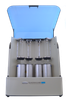
from Quantachrome Instruments
The new QUADRASORB evo ™ Gas Sorption Surface Area and Pore Size Analyzer has been designed for flexibility, performance, accuracy, and modularity. It will adapt to your lab ’s evolving material characterization needs, both through the day, and over the years. If you start an analysis in... [See More]
- Test Media: Powders
- Display & Special Features: Benchtop or Laboratory; PC Interface / Networkable; SPC Software or Capability
- Properties Analyzed: Pore Distribution; Porosimetry / Pore Volume

from Micromeritics
Micromeritics' AutoPore IV 9500 Series characterizes a material ’s porosity by applying various levels of pressure to a sample immersed in mercury. The pressure required to intrude mercury into the sample ’s pores is inversely proportional to the size of the pores. This is called mercury... [See More]
- Test Media: Building & Construction Materials; Ceramics; Chemicals; Concrete/Mortar; Food / Beverage; Foam / Porous Materials; Geological (Rock, Strata, etc.); Metals; Powders; Catalyst
- Methods, Technology & Standards: Mercury Porosimetry
- Properties Analyzed: Densometry / Pore Size
- Display & Special Features: Benchtop or Laboratory; PC Interface / Networkable
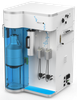
from Quantachrome Instruments
Ideal for surface area and mesopore analysis, the iQ-AG is available in up to three-station versions and provides an easy upgrade path to high vacuum, low pressure and chemisorption capabilities should your needs change. Usable with nitrogen, argon, carbon dioxide and a host of other gases... [See More]
- Test Media: Powders
- Display & Special Features: Benchtop or Laboratory; PC Interface / Networkable; SPC Software or Capability
- Properties Analyzed: Porosimetry / Pore Volume

from Micromeritics
The ASAP 2460 Surface Area and Porosity Analyzer incorporates a unique expandable system designed for high-performance and high sample throughput. The base ASAP 2460 is a two-port master control unit. For more throughput, additional two-port units can be connected to the master unit expanding the... [See More]
- Test Media: Adhesives/Sealants; Ceramics; Chemicals; Food / Beverage; Geological (Rock, Strata, etc.); Metals; Powders; Catalyst
- Methods, Technology & Standards: Gas Sorption Technique
- Properties Analyzed: Porosimetry / Pore Volume
- Display & Special Features: Benchtop or Laboratory; PC Interface / Networkable
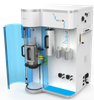
from Quantachrome Instruments
When bench space is at a premium and maximum capability is essential. The only combined chemisorption-physisorption manometric analyzer that features built-in degassing stations and optional second and third physisorption ports. Built-in flow options put this model even further ahead of the field. [See More]
- Test Media: Powders
- Display & Special Features: Benchtop or Laboratory; PC Interface / Networkable; SPC Software or Capability
- Properties Analyzed: Porosimetry / Pore Volume

from Micromeritics
The Tristar ® II 3020 provides high-quality surface area and porosity measurements on solid materials by using the technique of gas adsorption. The TriStar II is a fully automated, three-station analyzer capable of increasing the speed and efficiency of quality control analyses, with the... [See More]
- Test Media: Adhesives/Sealants; Ceramics; Food / Beverage; Foam / Porous Materials; Geological (Rock, Strata, etc.); Powders; Catalyst
- Methods, Technology & Standards: Flowing Gas Method
- Properties Analyzed: Porosimetry / Pore Volume
- Display & Special Features: PC Interface / Networkable; SPC Software or Capability

from Quantachrome Instruments
NOVAtouch ™ Series. High Speed Surface Area and Pore Size Analyzer. Introducing the Next Generation of NOVA Analyzers. Now with Advanced Touchscreen and Higher Throughput Capabilities. The NOVAtouch ™ provides the next generation of NOVA analyzer performance and features. It delivers... [See More]
- Test Media: Ceramics; Food / Beverage; Foam / Porous Materials; Metals; Powders; Soil
- Display & Special Features: Benchtop or Laboratory; PC Interface / Networkable; Video
- Properties Analyzed: Pore Distribution; Porosimetry / Pore Volume

from Micromeritics
Micromeritics' TriStar II PLUS is a state-of-the-art instrument suited for use in both quality control and research .environments. Intended for laboratories that require high throughput and the highest quality data, it contains all the capabilities of the TriStar II with additional hardware and... [See More]
- Test Media: Adhesives/Sealants; Ceramics; Food / Beverage; Foam / Porous Materials; Geological (Rock, Strata, etc.); Powders; Catalyst
- Methods, Technology & Standards: Flowing Gas Method
- Properties Analyzed: Porosimetry / Pore Volume
- Display & Special Features: Benchtop or Laboratory; PC Interface / Networkable; SPC Software or Capability

from Quantachrome Instruments
The Porometer 3G micro is the capillary flow porometer with small-to-medium pore size capability, and customizable flow rate options. The standard pressure capability of up to 100 psi / 7 bar allows for pore size distributions in the range of 0.09 µm up to >90 µm to be measured easily... [See More]
- Test Media: Ceramics; Foam / Porous Materials; Paper; Powders; Textiles; Membranes, Sintered Metals
- Display & Special Features: Benchtop or Laboratory; SPC Software or Capability
- Properties Analyzed: Porosimetry / Pore Volume