
Pulp / Paper Densometers and Porosimeters
Description
Pulp and paper densometers and porosimeters are specialized testing instruments used to measure the porosity, air-permeability, or air resistance of sheet-like or bulk materials such as paper, woven cloth, porous plastics, nonwovens, textiles, filtration media, and membranes. These devices help determine the time required to drive a fixed, known volume of air through a sample, providing insights into the material's permeability characteristics.
Working Principle
Densometers and porosimeters operate by measuring the flow of air through a material. A densometer measures the time it takes to force a known volume of air through one square inch of material, which is particularly useful for materials with lower permeability. In contrast, a porosimeter measures the flow of air in cubic feet per minute that passes through a square foot of the material, making it suitable for materials where air flow is a critical characteristic. These measurements are crucial for understanding the material's structure and behavior, especially in applications where air permeability is a key factor.
Applications
Densometers and porosimeters are widely used in industries that manufacture woven textiles and plastics, such as felt or other industrial fabrics. They are also employed in the oil and gas industries to test the porosity of petroleum reservoirs. In the pulp and paper industry, these instruments are essential for analyzing properties such as ink spreading, penetration, and adsorption, which are critical for optimizing printability and product development.
Advantages over other Densometers and Porosimeters
A notable advantage of modern densometers and porosimeters is the use of oil-filled pressure systems, which are replacing older mercury-based models. This advancement reduces the environmental and health risks associated with mercury, while still providing accurate measurements of porosity and permeability.
Limitations
One limitation of densometers and porosimeters is their reliance on specific measurement conditions, such as pressure and temperature, which can affect the accuracy of the results. Additionally, the use of mercury in some porosimeters poses environmental and health concerns, although newer models are addressing this issue.
Considerations
When selecting a densometer or porosimeter, it is important to consider factors such as initial costs, operating expenses, and maintenance requirements. Oil-filled pressure densometers, for example, may have higher initial costs but offer improved safety and environmental benefits over mercury-based models. Durability and accuracy are also critical considerations, as these instruments need to provide reliable data over time. Regular maintenance and calibration are necessary to ensure consistent performance and accuracy.
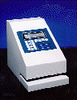
from Gurley Precision Instruments
Our flagship instrument. The Model 4340 combines the abilities of our textile, standard and high pressure Densometers, S-P-S Testers as well as our programmable digital timers and provides a reading in seconds, thus reducing the time required to test a material. By utilizing state-of-the-art mass... [See More]
- Test Media: Paper; Textiles
- Methods, Technology & Standards: Mass flow and servo-regulator technology, automatic test feature, auto-drive mechanism
- Properties Analyzed: Densometry / Pore Size
- Display & Special Features: Digital; Process Line Mounted for Continuous Monitoring

from Gurley Precision Instruments
GENUINE GURLEYTM Cobb Sizing Testers have been manufactured by Gurley for over a half-century and represent an economical and practical means of determining liquid absorptiveness or resilience of treated and untreated papers, boards, fabrics and other sheet materials. The complete kit consists of... [See More]
- Test Media: Paper; Textiles
- Methods, Technology & Standards: Roller method
- Properties Analyzed: Porosimetry / Pore Volume
- Display & Special Features: Benchtop or Laboratory

from Gurley Precision Instruments
Densometers are the accepted standard for measuring the porosity of materials such as papers, wovens, plastics and membranes. All Densometers measure the time required for a given volume and of air (25cc to 400cc) to flow through a standard area of material being tested under light uniform pressure. [See More]
- Test Media: Paper; Textiles
- Display & Special Features: Digital; Process Line Mounted for Continuous Monitoring
- Properties Analyzed: Densometry / Pore Size

from Quantachrome Instruments
The Porometer 3G micro is the capillary flow porometer with small-to-medium pore size capability, and customizable flow rate options. The standard pressure capability of up to 100 psi / 7 bar allows for pore size distributions in the range of 0.09 µm up to >90 µm to be measured easily... [See More]
- Test Media: Ceramics; Foam / Porous Materials; Paper; Powders; Textiles; Membranes, Sintered Metals
- Display & Special Features: Benchtop or Laboratory; SPC Software or Capability
- Properties Analyzed: Porosimetry / Pore Volume