
SPC Software / Capability Densometers and Porosimeters
Description
Densometers and porosimeters are instruments used to measure the air permeability of materials. A densometer specifically measures the time it takes for a known volume of air to pass through a square inch of material, while a porosimeter measures the flow of air in cubic feet per minute through a square foot of material. These devices are essential for assessing the permeability characteristics of various substances, particularly in industries dealing with textiles and plastics.
Working Principle
Densometers operate by forcing a known volume of air through a material and measuring the time taken for this process. This method is particularly useful for materials with lower permeability. Porosimeters, on the other hand, measure the air flow rate through a material, providing insights into the material's porosity and permeability. These measurements are crucial for understanding how materials will perform in real-world applications, such as in breathable fabrics or absorbent materials. The use of mercury or oil in some porosimeters helps gauge porosity under high-pressure conditions, offering a detailed analysis of the material's characteristics.
Applications
Densometers and porosimeters find applications in industries that manufacture woven textiles and plastics, such as felt or other industrial fabrics. They are also used in the oil and gas industries to test the porosity of petroleum reservoirs. For example, a porosimeter might be used to evaluate the air flow characteristics of a new type of breathable fabric, ensuring it meets industry standards for comfort and performance. In the oil industry, these devices help assess the porosity of rock formations, which is critical for determining the potential yield of a reservoir.
Advantages over other Densometers and Porosimeters
A newer oil-filled pressure densometer is replacing older mercury-based models, offering a safer and potentially more accurate method of measuring material permeability. This advancement reduces the environmental and health risks associated with mercury use while maintaining or improving measurement accuracy.
Limitations
One limitation of densometers and porosimeters is their reliance on specific conditions for accurate measurements. For instance, the use of mercury in some porosimeters requires careful handling and disposal due to its toxic nature. Additionally, the accuracy of these devices can be affected by the material's surface characteristics and environmental conditions during testing.
Considerations
When selecting a densometer or porosimeter, considerations should include initial costs, operating expenses, and the durability of the device. The accuracy of measurements is paramount, so choosing a device that offers reliable and repeatable results is essential. Maintenance and replacement costs should also be factored in, as these can impact the long-term cost-effectiveness of the instrument. Devices that use safer materials, such as oil instead of mercury, may offer advantages in terms of environmental impact and regulatory compliance.
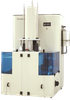
from Quantachrome Instruments
The PoreMaster ® GT Series —. fully automated, high-performance mercury porosimeters that offer two high-pressure and two low-pressure analysis ports to meet the pore size measurement needs of the busiest laboratories. In addition to "two samples in a single loading, " (patented)... [See More]
- Display & Special Features: Benchtop or Laboratory; PC Interface / Networkable; SPC Software or Capability
- Test Media: Powders; Powders, Bulk Solids
- Properties Analyzed: Densometry / Pore Size; Porosimetry / Pore Volume

from Micromeritics
The Tristar ® II 3020 provides high-quality surface area and porosity measurements on solid materials by using the technique of gas adsorption. The TriStar II is a fully automated, three-station analyzer capable of increasing the speed and efficiency of quality control analyses, with the... [See More]
- Display & Special Features: PC Interface / Networkable; SPC Software or Capability
- Test Media: Adhesives/Sealants; Ceramics; Food / Beverage; Foam / Porous Materials; Geological (Rock, Strata, etc.); Powders; Catalyst
- Properties Analyzed: Porosimetry / Pore Volume
- Methods, Technology & Standards: Flowing Gas Method
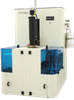
from Quantachrome Instruments
The PoreMaster series consists of three automatic mercury intrusion porosimeters offering new concepts in automated pore size analysis.The PoreMaster 33 porosimeter achieves a maximum pressure of 33,000 psia for pore size measurements in the range from over 1100* micron to 0.0064 micron pore... [See More]
- Display & Special Features: Benchtop or Laboratory; PC Interface / Networkable; SPC Software or Capability; Video
- Test Media: Powders; Powders, Pellets, Bulk Solids
- Properties Analyzed: Porosimetry / Pore Volume

from Micromeritics
Micromeritics' TriStar II PLUS is a state-of-the-art instrument suited for use in both quality control and research .environments. Intended for laboratories that require high throughput and the highest quality data, it contains all the capabilities of the TriStar II with additional hardware and... [See More]
- Display & Special Features: Benchtop or Laboratory; PC Interface / Networkable; SPC Software or Capability
- Test Media: Adhesives/Sealants; Ceramics; Food / Beverage; Foam / Porous Materials; Geological (Rock, Strata, etc.); Powders; Catalyst
- Properties Analyzed: Porosimetry / Pore Volume
- Methods, Technology & Standards: Flowing Gas Method
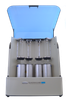
from Quantachrome Instruments
The new QUADRASORB evo ™ Gas Sorption Surface Area and Pore Size Analyzer has been designed for flexibility, performance, accuracy, and modularity. It will adapt to your lab ’s evolving material characterization needs, both through the day, and over the years. If you start an analysis in... [See More]
- Display & Special Features: Benchtop or Laboratory; PC Interface / Networkable; SPC Software or Capability
- Test Media: Powders
- Properties Analyzed: Pore Distribution; Porosimetry / Pore Volume

from Quantachrome Instruments
INTRODUCTION. Autosorb ® 6iSA ™ surface area and pore size analyzer allows a researcher to get a 360 degree perspective of the complex material pore structure enabling a variety of analysis techniques including adsorption isotherms, desorption isotherms, single point BET, multi-point BET,... [See More]
- Display & Special Features: Benchtop or Laboratory; PC Interface / Networkable; SPC Software or Capability
- Properties Analyzed: Porosimetry / Pore Volume
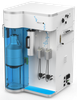
from Quantachrome Instruments
Ideal for surface area and mesopore analysis, the iQ-AG is available in up to three-station versions and provides an easy upgrade path to high vacuum, low pressure and chemisorption capabilities should your needs change. Usable with nitrogen, argon, carbon dioxide and a host of other gases... [See More]
- Display & Special Features: Benchtop or Laboratory; PC Interface / Networkable; SPC Software or Capability
- Test Media: Powders
- Properties Analyzed: Porosimetry / Pore Volume
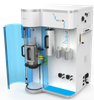
from Quantachrome Instruments
When bench space is at a premium and maximum capability is essential. The only combined chemisorption-physisorption manometric analyzer that features built-in degassing stations and optional second and third physisorption ports. Built-in flow options put this model even further ahead of the field. [See More]
- Display & Special Features: Benchtop or Laboratory; PC Interface / Networkable; SPC Software or Capability
- Test Media: Powders
- Properties Analyzed: Porosimetry / Pore Volume