
'High Temperature' Rating Thermistors
Last Updated: April 1, 2025
Description
High temperature rating thermistors are semiconductor devices designed to measure temperature by exhibiting a change in electrical resistance with temperature variations. They are specifically engineered to operate effectively within a limited temperature range, typically up to a few hundred degrees Celsius, providing precise temperature readings.
Working Principle
Thermistors operate based on the principle that their electrical resistance changes with temperature. There are two main types of thermistors: Negative Temperature Coefficient (NTC) and Positive Temperature Coefficient (PTC). NTC thermistors decrease in resistance as temperature increases, while PTC thermistors increase in resistance with rising temperature. This characteristic makes them highly sensitive and useful for precise temperature monitoring and control. Their small size and high stability contribute to their effectiveness in applications requiring accurate temperature measurements.
Applications
High temperature rating thermistors are used in a variety of applications. They are commonly found in automotive systems for monitoring and controlling exhaust emissions. In the medical field, they are used in devices like skin sensors and blood analyzers. They also play a role in consumer electronics, such as mobile phones and battery pack charging systems, where precise temperature control is crucial.
Advantages over other Thermistors
Compared to other temperature sensors like RTDs and thermocouples, thermistors offer advantages such as higher sensitivity and faster response times due to their small size. They are also more cost-effective, with prices starting as low as $0.10, making them an economical choice for many applications. Their high degree of stability and accuracy further enhances their appeal for precise temperature measurements.
Limitations
Thermistors have a limited temperature range, typically up to 300°C, which restricts their use in extreme temperature environments. They are also more fragile than other temperature sensors, requiring careful mounting to avoid damage. Additionally, thermistors can drift out of their specified tolerance over time, especially with extended exposure to high temperatures.
Considerations
When considering the use of high temperature rating thermistors, it is important to account for initial costs, which can vary depending on the manufacturer and specific requirements. Operating expenses are generally low due to their durability and long-lasting nature. However, their non-linearity may require additional calibration for precise applications. Maintenance costs are typically minimal, but regular checks are recommended to ensure accuracy and performance over time.
from Trigon Components, Inc.
SERIES. JNC. DESCRIPTION. Disc, Temperature Compensation. ZERO POWER RESISTANCE. 3 to 470000ohm. THERMAL DISSIPATION CONSTANT. 8 to 10mw_ °C. THERMAL TIME CONSTANT. 14 to 28sec. PACKAGE. Radial. FEATURE. •Operating Temperature Range: -30~125 °C. •Application: Adaptor, Charger. [See More]
- Temperature Range: -30 to 125
- Thermal Time Constant: 14 to 28
- Resistance (@25°C): 3 to 470000
- Dissipation Constant: 8 to 10
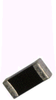
from Trigon Components, Inc.
SERIES. JNT. DESCRIPTION. Chip, Temperature Compensation. ZERO POWER RESISTANCE. 2K to 200Kohm. THERMAL DISSIPATION CONSTANT. <1.5mw_ Deg C. THERMAL TIME CONSTANT. <5sec. PACKAGE. SMD. FEATURE. •Operating Temperature Range: -40~125 Deg C. •Application: Mobile Cell, Battery Charger,... [See More]
- Temperature Range: -40 to 125
- Thermal Time Constant: 5
- Resistance (@25°C): 2000 to 200000
- Dissipation Constant: 1.5