
Surface Thermistors
Last Updated: April 1, 2025
Description
Surface thermistors are temperature-sensitive devices that measure temperature by detecting changes in electrical resistance. They are typically mounted on surfaces to monitor temperature variations accurately. These devices are known for their compact size and high sensitivity, making them suitable for precise temperature measurements.
Working Principle
Surface thermistors operate based on the principle that their electrical resistance changes with temperature. There are two main types: Negative Temperature Coefficient (NTC) thermistors, where resistance decreases as temperature increases, and Positive Temperature Coefficient (PTC) thermistors, where resistance increases with rising temperature. This property allows them to provide accurate temperature readings by measuring the resistance change. Their high sensitivity and stability make them useful for applications requiring precise temperature monitoring.
Applications
Surface thermistors are used in a variety of applications due to their precision and sensitivity. Specific examples include automotive systems for monitoring and controlling exhaust emissions, ice detection systems, and medical devices such as skin sensors and blood analyzers. They are also employed in consumer electronics like refrigerators, freezers, mobile phones, and battery pack charging systems.
Advantages over other Thermistors
Surface thermistors offer several advantages over other types of thermistors. They are known for their small size, which allows for easy integration into various systems. Their high degree of stability and accuracy makes them ideal for applications requiring precise temperature measurements. Additionally, they are long-lasting, providing reliable performance over extended periods.
Limitations
Despite their advantages, surface thermistors have some limitations. They are not suitable for use in extreme temperature environments due to their limited temperature range. Their non-linearity can also pose challenges in certain applications, requiring additional calibration or compensation. Furthermore, they are more fragile compared to other temperature sensing devices, which can affect their durability in harsh conditions.
Considerations
When considering the use of surface thermistors, several factors should be taken into account. Initial costs can vary, with prices ranging from as low as $0.10 to as high as $25, depending on the manufacturer and specifications. Operating expenses are generally low due to their energy efficiency. However, their fragility may lead to higher replacement and maintenance costs if used in demanding environments. Accuracy is a strong point for surface thermistors, but their limited temperature range and non-linearity should be considered when selecting them for specific applications.
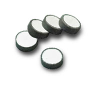
from Pelonis Technologies, Inc.
Pelonis Technologies' innovative PTC Thermistors are at the heart of Fin PTC Air Heaters and PTC Heat Conductors and are a great choice for providing controlled electrical heat. Their design flexibility and self-regulating electric heat characteristics make them ideal for increased heat transfer and... [See More]
- Housing: Surface
- Special Reference Temperature: 115
- Resistance (@25°C): 6 to 12
- Package / Electrode Type: Chip/Surface

from OMEGA Engineering, Inc.
All of OMEGA's Thermistor elements can be supplied with additional lead wire attached to existing leads. Longer leads create more flexibility for use in many applications. The size of the potted junction between lead wire and element is kept as small as possible. Note: These elements are not... [See More]
- Housing: Surface
- Resistance (@25°C): 2252 to 30000
- Temperature Range: -79 to 121
- Thermal Time Constant: 1

from Ohmite Manufacturing Co.
The TX series is the first thermistor released by Ohmite. The TX series is avaiable in 3 sizes (0402,0603, and 0805). The B-constant of the TX series is taken at 25 °C to 85 °C with values ranging from 2750K and 4700K. With AEC-Q200 compliance available, your automotive applications await... [See More]
- Housing: Surface
- Thermal Time Constant: 1.5 to 2.5
- Temperature Range: -40 to 52
- Dissipation Constant: 1.1 to 1.3

from Thermik Corporation
With connector cables. Insulation pvdf (kynar ®) [See More]
- Housing: Surface
- Package / Electrode Type: Chip/Surface
- Temperature Range: 70 to 180
- Lead Style: Radial

from Thermik Corporation
With connector cables. Mylar ®-Nomex ® [See More]
- Housing: Surface
- Package / Electrode Type: Chip/Surface
- Temperature Range: 70 to 180
- Lead Style: Radial

from Thermik Corporation
Where possible, the PTCs are to be inserted parallel to the coil. As a result, when shaping the coil ends, the mechanical stress of the PTCs is minimised. In so doing, the Mylar ®- Nomex ® shrink cap is highly suited to this purpose due to its mechanical stability (no cold flow in... [See More]
- Housing: Surface
- Package / Electrode Type: Chip/Surface
- Temperature Range: 60 to 190
- Lead Style: Radial

from Thermik Corporation
With connector cables. Insulation PTFE [See More]
- Housing: Surface
- Package / Electrode Type: Chip/Surface
- Temperature Range: 70 to 180
- Lead Style: Radial

from Thermik Corporation
Where possible, the PTCs are to be inserted parallel to the coil. As a result, when shaping the coil ends, the mechanical stress of the PTCs is minimised. In so doing, the Mylar ®- Nomex ® shrink cap is highly suited to this purpose due to its mechanical stability (no cold flow in... [See More]
- Housing: Surface
- Package / Electrode Type: Chip/Surface
- Temperature Range: 60 to 190
- Lead Style: Radial