
Sanitary Velocity Flow Switches
Last Updated: April 1, 2025
Description
Sanitary velocity flow switches are devices designed to monitor the flow of liquids in sanitary environments. They are specifically engineered to ensure that the flow of liquid is maintained within a desired range, triggering an alert or action if the flow deviates from this range. These switches are crucial in maintaining the integrity and safety of processes in environments where hygiene is paramount.
Working Principle
Sanitary velocity flow switches operate by detecting the velocity of a liquid flowing through a pipe. They typically use thermal dispersion technology, which involves measuring the rate of heat loss from a heated sensor to the fluid. This rate of heat loss is directly proportional to the flow velocity of the liquid. When the flow velocity falls below or rises above a predetermined setpoint, the switch activates an alarm or control mechanism. This technology is useful because it provides reliable flow monitoring without any moving parts, reducing the risk of mechanical failure and ensuring long-term durability.
Applications
Sanitary velocity flow switches are commonly used in industries where maintaining a clean and sterile environment is critical. Specific examples include:
- Food and Beverage Processing: Ensuring that liquids such as milk, juices, or other beverages flow at the correct rate to maintain product quality and safety.
- Pharmaceutical Manufacturing: Monitoring the flow of liquid ingredients to ensure precise formulation and prevent contamination.
- Biotechnology: Used in processes where the flow of biological fluids needs to be tightly controlled to maintain the integrity of experiments or production.
Advantages over other Materials - Plastics and Polymers
Sanitary velocity flow switches, often made from stainless steel or other sanitary-grade materials, offer several advantages over plastic and polymer-based switches:
- Durability: Metals like stainless steel are more resistant to wear and tear compared to plastics, especially in high-temperature or corrosive environments.
- Hygiene: Metal surfaces are easier to clean and sterilize, which is crucial in sanitary applications where contamination must be minimized.
- Temperature Resistance: Metals can withstand higher temperatures without deforming, making them suitable for processes involving heat.
Limitations
One limitation of sanitary velocity flow switches is their sensitivity to changes in fluid properties, such as viscosity or temperature, which can affect the accuracy of flow measurements. Additionally, the initial cost of metal-based switches can be higher compared to plastic alternatives, which might be a consideration for budget-conscious operations.
Considerations
When selecting sanitary velocity flow switches, several factors should be considered:
- Initial Costs: Metal-based switches may have a higher upfront cost compared to plastic ones, but their durability can lead to cost savings over time.
- Operating Expense: The lack of moving parts in thermal dispersion switches reduces maintenance costs and downtime.
- Durability: Metal switches offer superior durability, especially in harsh environments, which can extend the lifespan of the device.
- Accuracy: While generally accurate, these switches can be affected by changes in fluid properties, so calibration and regular checks are recommended.
- Replacement and Maintenance Costs: Although initial costs may be higher, the long-term savings from reduced maintenance and replacement frequency can be significant.

from OMEGA Engineering, Inc.
The FSW-9000 Series is a flow switch monitor that measures the velocity of the flow. It is ideal for use in measurement and control liquid applications. The FSW-9000 Series provides two output options: a 4 to 20mA analog output and a PNP/NPN output. For the 4 to 20 mA output, the electronics ’... [See More]
- Features: Sanitary Applications Rated
- Mounting: In-line
- Pipe Diameter: 0.50 to 0.75
- End Fittings: In-line Threaded
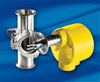
from Fluid Components Intl. (FCI)
The FLT93C insertion and inline type FlexSwitches for sanitary flow, level and temperature monitoring represents the first true technological breakthrough in thermal technology in over a decade. This product is specifically designed for sanitary 3A process applications. FCI is the only thermal... [See More]
- Features: Sanitary Applications Rated
- Mounting: Insertion
- Meter Technology: Thermal
- End Fittings: In-line Flanged