
Through Shaft Pneumatic Brake and Clutch Assemblies
Description
Through Shaft Pneumatic Brake and Clutch Assemblies are mechanical devices designed to control the transmission of power in machinery. They engage and disengage power from a power source to a driven device, allowing for the control of rotational motion. These assemblies are crucial in managing the speed and torque of rotating equipment by either engaging the clutch to transfer power or applying the brake to slow or stop motion.
Working Principle
Through Shaft Pneumatic Brake and Clutch Assemblies operate using compressed air to actuate the clutch and brake mechanisms. When the clutch is engaged, it transfers power from the engine or motor to the driven device, such as a transmission or conveyor. This is achieved by aligning the drive shaft with the load shaft, allowing rotational energy to pass through. Conversely, when the brake is applied, it slows or stops the movement of the coupled shafts by creating friction that opposes the rotational motion. The pneumatic actuation provides a quick response and precise control, making these assemblies useful for applications requiring rapid engagement and disengagement.
Applications
Specific applications for Through Shaft Pneumatic Brake and Clutch Assemblies include their use in conveyor systems, where they control the start and stop functions of the conveyor belts. They are also employed in packaging machinery to manage the precise movement of materials and in printing presses to control the speed and tension of the paper feed.
Advantages over other Manufacturing - Machine Tools
Through Shaft Pneumatic Brake and Clutch Assemblies offer several advantages over other types of brake and clutch systems. Their pneumatic actuation allows for faster response times compared to hydraulic systems, which can be crucial in high-speed applications. Additionally, they tend to be lighter and more compact, making them suitable for applications where space is limited. The use of compressed air also reduces the risk of fluid leaks, which can be a concern with hydraulic systems.
Limitations
One limitation of Through Shaft Pneumatic Brake and Clutch Assemblies is their reliance on a compressed air supply, which can be a constraint in environments where such a supply is not readily available. Additionally, the performance of pneumatic systems can be affected by changes in air pressure, which may lead to variations in the engagement and braking force.
Considerations
When considering the use of Through Shaft Pneumatic Brake and Clutch Assemblies, it is important to evaluate the initial costs, which can be higher due to the need for a compressed air system. Operating expenses may also include the maintenance of the air supply system. However, these assemblies generally offer good durability and require less maintenance compared to hydraulic systems, as they do not involve fluid handling. Accuracy in control is another consideration, as pneumatic systems can provide precise engagement and disengagement, which is beneficial for applications requiring high precision. Replacement and maintenance costs are typically lower due to the simplicity of the pneumatic components compared to more complex hydraulic systems.

from Mach III Clutch, Inc.
Operation. Applying air pressure releases the spring applied friction brake and engages the friction clutch. Torque of the clutch is linear in response to air pressure applied above the brake release pressure. Brake torque is fixed by spring pressure. Mounting. Through (Mid) Shaft or End of Shaft. [See More]
- Mounting: Through; Shaft - VPulley
- Pneumatic Pressure: 80
- Torque: 0.0 to 22.9
- Spring Assistance: Spring Return/Disengage
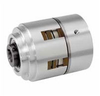
from Mach III Clutch, Inc.
Operation. Applying air pressure releases the spring applied friction brake and engages the friction clutch. Torque of the clutch is linear in response to air pressure applied above the brake release pressure. Brake torque is fixed by spring pressure. Mounting. Through (Mid) Shaft or End of Shaft. [See More]
- Mounting: Through; Shaft - VPulley
- Pneumatic Pressure: 80
- Torque: 0.0 to 22.9
- Spring Assistance: Spring Return/Disengage

from Mach III Clutch, Inc.
Operation. Applying air pressure releases the spring applied friction brake and engages the friction clutch. Torque of the clutch is linear in response to air pressure applied above the brake release pressure. Brake torque is fixed by spring pressure. Mounting. Through (Mid) Shaft or End of Shaft. [See More]
- Mounting: Through; Shaft - VPulley
- Pneumatic Pressure: 80
- Torque: 0.0 to 22.9
- Spring Assistance: Spring Return/Disengage