
Parallel Pneumatic Brake and Clutch Assemblies
Description
Parallel Pneumatic Brake and Clutch Assemblies are mechanical devices designed to manage the transmission of power in various systems. They function by engaging and disengaging power between a power source and a driven component, allowing for controlled movement and stopping of machinery.
Working Principle
Parallel Pneumatic Brake and Clutch Assemblies operate using compressed air to engage and disengage the clutch and brake components. The pneumatic system provides the force necessary to press the clutch plates together or release them, thereby controlling the power transmission. This method is advantageous because it allows for smooth and rapid engagement and disengagement, which is crucial for maintaining the efficiency and safety of mechanical systems. The use of pneumatic systems also reduces the need for manual intervention, making these assemblies highly useful in automated environments.
Applications
These assemblies are commonly used in industrial machinery where precise control of power transmission is required. Specific examples include conveyor systems, where they manage the start and stop functions, and in automotive manufacturing, where they are used in assembly lines to control the movement of parts and components.
Advantages over other Manufacturing - Machine Tools
Parallel Pneumatic Brake and Clutch Assemblies offer several advantages over other types of manufacturing tools. They provide faster response times due to the rapid engagement and disengagement capabilities of pneumatic systems. Additionally, they require less maintenance compared to hydraulic systems, as they do not involve fluids that can leak or require regular replacement. This makes them more reliable and cost-effective in the long run.
Limitations
One limitation of these assemblies is their dependency on a constant supply of compressed air, which can be a constraint in environments where air supply is limited or inconsistent. Additionally, they may not be suitable for applications requiring extremely high torque, as pneumatic systems generally provide less force compared to hydraulic systems.
Considerations
When considering the use of Parallel Pneumatic Brake and Clutch Assemblies, it is important to evaluate the initial costs, which can be higher due to the need for a pneumatic system setup. Operating expenses are generally lower, as they require less maintenance and have fewer components that can wear out. However, durability can be a concern if the system is not properly maintained, as air leaks can reduce efficiency. Accuracy in power transmission is typically high, but regular checks are necessary to ensure optimal performance. Replacement and maintenance costs are generally lower compared to hydraulic systems, but it is crucial to ensure that the pneumatic system is free from leaks and other issues that could affect performance.

from Mach III Clutch, Inc.
Operation. Applying air pressure releases the spring applied friction brake and engages the friction clutch. Torque of the clutch is linear in response to air pressure applied above the brake release pressure. Brake torque is fixed by spring pressure. Mounting. Through (Mid) Shaft or End of Shaft. [See More]
- Shaft: Parallel
- Pneumatic Pressure: 80
- Torque: 0.0 to 22.9
- Spring Assistance: Spring Return/Disengage
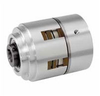
from Mach III Clutch, Inc.
Operation. Applying air pressure releases the spring applied friction brake and engages the friction clutch. Torque of the clutch is linear in response to air pressure applied above the brake release pressure. Brake torque is fixed by spring pressure. Mounting. Through (Mid) Shaft or End of Shaft. [See More]
- Shaft: Parallel
- Pneumatic Pressure: 80
- Torque: 0.0 to 22.9
- Spring Assistance: Spring Return/Disengage

from Mach III Clutch, Inc.
Operation. Applying air pressure releases the spring applied friction brake and engages the friction clutch. Torque of the clutch is linear in response to air pressure applied above the brake release pressure. Brake torque is fixed by spring pressure. Mounting. Through (Mid) Shaft or End of Shaft. [See More]
- Shaft: Parallel
- Pneumatic Pressure: 80
- Torque: 0.0 to 22.9
- Spring Assistance: Spring Return/Disengage