
Triple Pole (TP) Thermal Overload Relays
Description
Triple Pole (TP) Thermal Overload Relays are protective devices used in electrical circuits to prevent motors from overheating. They consist of three heating elements wired in series with the motor supply leads, providing protection by interrupting the circuit when excessive current is detected.
Working Principle
TP Thermal Overload Relays operate using a bimetallic strip mechanism. When the motor experiences an overcurrent, the heat generated causes the bimetallic strip to bend due to the different expansion rates of the metals. This bending action pulls a spring, which opens the contacts and breaks the circuit, thus protecting the motor from damage. The relay will reset once the strip cools and returns to its original shape. This mechanism is useful because it provides an inherent time delay, preventing nuisance tripping during short overcurrent events, such as motor startups .
Applications
Triple Pole Thermal Overload Relays are commonly used in conjunction with three-phase AC motors. They are integrated into motor starter assemblies, working alongside contactors to control the power supply and provide necessary protection. Specific applications include industrial machinery, HVAC systems, and any equipment that relies on three-phase motors for operation .
Advantages over other Thermal Overload Relays
One advantage of TP Thermal Overload Relays is their ability to provide precise protection tailored to specific motor requirements through adjustable trip settings. This feature allows for calibration to the motor's normal operating current, enhancing protection accuracy and reliability .
Limitations
A notable limitation of TP Thermal Overload Relays is that they typically require manual resetting after tripping due to an overload. This ensures that the cause of the overload is investigated and corrected before the motor is restarted, which can be seen as both a safety feature and a potential inconvenience .
Considerations
When selecting TP Thermal Overload Relays, several factors should be considered. Initial costs can vary depending on the specific features and capabilities of the relay. Operating expenses are generally low, but the need for manual resetting can impact downtime and maintenance costs. Durability and accuracy are typically high, given the robust design and precise calibration options. However, replacement and maintenance costs should be factored into the overall cost of ownership, especially in environments with frequent overload conditions .
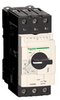
from Schneider Electric, Automation & Control
TeSys GV3 - Magnetic and thermal magnetic motor circuit breakers up to 30 kW. Can be easily integrated with all configurations, thanks to their 55 mm standard width and mounting on DIN rail. GV3 P Thermal-Magnetic Breaker: 7 ratings from 9 to 65 A used for magnetic and thermal motor protection from... [See More]
- Poles: Triple Pole (TP)
- Operating Temp: -4 to 140
- Full Load Current Range: 56.00 to 80.00