
Solid State Overload Relay Thermal Overload Relays
Description
Solid State Overload Relay Thermal Overload Relays are devices designed to protect electric motors from damage due to overcurrent conditions. They achieve this by monitoring the current flowing through the motor and interrupting the circuit if the current exceeds a predetermined threshold for a specific duration.
Working Principle
Solid State Overload Relays operate by measuring the current or changes in resistance rather than generating heat to trip a circuit. This method allows for more precise and reliable protection compared to traditional thermal relays. They often include advanced features such as ambient temperature sensing, programmable trip-time, and current-change detection, which enhance their functionality and adaptability to various operational conditions .
Applications
These relays are commonly used in industrial settings where electric motors are prevalent. Specific examples include integration with AC motor starters, where they provide overload protection by working in conjunction with contactors to control the power supply to the motor . They are also used in systems requiring phase failure and phase reversal protection, ensuring the motor operates within safe parameters .
Advantages over other Thermal Overload Relays
Solid State Overload Relays offer several advantages over traditional bimetallic thermal relays. They do not rely on heat generation to trip the circuit, which allows for more accurate and faster response times. Additionally, their ability to incorporate features like ambient temperature compensation and programmable settings provides more precise protection tailored to specific applications .
Limitations
One limitation of Solid State Overload Relays is their reliance on electronic components, which may be susceptible to damage from voltage spikes or other electrical disturbances. This can potentially lead to higher maintenance requirements compared to simpler mechanical relays.
Considerations
When considering Solid State Overload Relays, it is important to evaluate the initial costs, which may be higher than traditional thermal relays due to their advanced features and electronic components. However, their increased accuracy and reliability can lead to reduced operating expenses and longer motor life, offsetting the initial investment. Durability and maintenance costs should also be considered, as electronic components may require more frequent inspections and replacements in harsh environments .
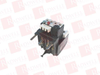
from Radwell International
RELAY, THERMAL OVERLOAD, SOLID STATE, 18-30 AMP, 3 POLE, 1 NORMALLY OPEN, 1 NORMALLY CLOSED. FREE 2 YEAR RADWELL WARRANTY [See More]
- Overload Relay Type: SolidState
- Full Load Current Range: 30.00

from WorldWide Electric Corporation
Selectable Trip Classes: 5, 10, 20 and 30. Manual, automatic, and remote reset. Phase loss protection - trips in less than 3 seconds. Phase unbalance protection - trips based on trip class selected (minimize temperature rise of the motor on a asymmetrical three-phase system). Thermal memory... [See More]
- Overload Relay Type: SolidState
- Motor / Load Phase: Three
- Full Load Current Range: 0.25 to 1.00
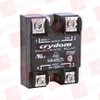
from Radwell International
SOLID STATE RELAY, 4-32 VDC CONTROL VOLTAGE, 48-530 VAC OPERATING VOLTAGE, 50 AMP RATED LOAD, SCREW TERMINATION, OVERVOLTAGE PROTECTION/ THERMAL PAD INCLUDED. FREE 2 YEAR RADWELL WARRANTY [See More]
- Overload Relay Type: SolidState
- Control Voltage: 32
- Full Load Current Range: 50.00
- Contact Voltage: 530