
Visual Indicator Thermal Overload Relays
Description
Visual Indicator Thermal Overload Relays are devices designed to protect electric motors from damage due to overheating. They feature visual indicators, such as LEDs, that provide a clear status of the relay's operation, allowing for easy monitoring of the system's condition.
Working Principle
These relays operate by using a bimetallic strip that bends when exposed to heat generated by excess current. This bending action triggers a mechanism that opens the circuit, thereby stopping the current flow and protecting the motor from overheating. The visual indicators provide real-time feedback on the relay's status, making it easier to identify when the relay has tripped and requires attention. This functionality is crucial for preventing motor damage and ensuring operational safety.
Applications
Visual Indicator Thermal Overload Relays are commonly used in industrial settings where electric motors are prevalent. For example, they are integrated into motor starter assemblies in manufacturing plants to protect conveyor belt motors from overheating. They are also used in HVAC systems to safeguard fan motors and compressors, ensuring reliable operation and preventing costly downtime.
Advantages over other Thermal Overload Relays
One significant advantage of Visual Indicator Thermal Overload Relays is the inclusion of visual indicators, which provide immediate feedback on the relay's status. This feature reduces the time needed for troubleshooting and maintenance, as operators can quickly identify and address issues. Additionally, these relays often come with adjustable trip settings, allowing for precise calibration to the motor's normal operating current, which enhances protection and reduces the risk of nuisance tripping.
Limitations
A limitation of these relays is that they typically require manual resetting after tripping due to an overload. This means that an operator must be present to investigate and correct the cause of the overload before the motor can be restarted. This requirement can lead to increased downtime in automated systems where immediate manual intervention is not feasible.
Considerations
When selecting Visual Indicator Thermal Overload Relays, it is essential to consider factors such as initial costs, operating expenses, and maintenance requirements. While these relays may have a higher upfront cost due to their advanced features, the benefits of reduced downtime and enhanced motor protection can offset these costs over time. Durability and accuracy are also critical considerations, as these factors will influence the relay's long-term performance and reliability. Regular maintenance and timely replacement of worn components are necessary to ensure continued protection and optimal operation.
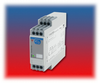
from CARLO GAVAZZI Automation Components
The DTA04 features universal input voltage, giving it flexibility to be installed in a variety of control panels. This is a DIN rail mounted thermistor relay whose main purpose is to protect electric motors from overheating, ensuring continuous production and preventing machine downtime. The... [See More]
- Features: Automatic Reset (optional feature); Visual Indicator
- Contact Current: 8
- Overload Relay Type: Temperature Control (Probe)
- Poles: Single Pole (SP)