
Medical / Biological Gas Chromatographs
Description
Medical and biological gas chromatographs are sophisticated instruments designed to separate and analyze complex mixtures of gases. These devices are crucial for identifying and quantifying the components within a sample by utilizing their unique physical properties. They consist of several key components, including a flowing mobile phase, an injection port, a separation column with a stationary phase, and a detector. The primary function of these chromatographs is to provide detailed analysis of the chemical composition of gases, which is essential in various medical and biological research and diagnostic applications.
Working Principle
The working principle of gas chromatography involves the separation of compounds based on their partitioning behavior between a mobile phase and a stationary phase. As the sample is introduced into the chromatograph, it is vaporized and carried by an inert gas through the separation column. The stationary phase within the column interacts differently with each compound, causing them to elute at different times. This separation is detected and recorded, allowing for the identification and quantification of the sample's components. Gas chromatographs are particularly useful because they can analyze compounds without inducing thermal decomposition, making them ideal for studying volatile organic compounds and low-concentration gas species.
Applications
Medical and biological gas chromatographs are employed in a variety of specific applications. They are extensively used in the analysis of respiratory gases and the study of anesthetic products, providing critical insights into patient care and treatment efficacy. Additionally, these instruments are used to analyze volatile organic compounds in biological samples, which can be crucial for diagnosing diseases or monitoring environmental exposure to harmful substances.
Advantages over other Gas Chromatographs
Medical and biological gas chromatographs offer several advantages over other types of gas chromatographs. They are specifically designed to handle complex biological samples, which often contain a wide range of volatile and semi-volatile compounds. This specialization allows for more accurate and reliable analysis in medical and biological contexts. Furthermore, these chromatographs are equipped with advanced detection methods, such as flame ionization detectors and thermal conductivity detectors, which enhance their sensitivity and specificity for medical applications.
Limitations
Despite their advantages, medical and biological gas chromatographs have certain limitations. One significant limitation is the requirement for samples to be volatile at the column operating temperature, which can restrict the types of compounds that can be analyzed. Additionally, the calibration of detectors for trace level gas analysis can be challenging, requiring precise control of gas mixtures and concentrations to ensure accurate results.
Considerations
When considering the use of medical and biological gas chromatographs, several factors should be taken into account. Initial costs can be substantial, as these instruments are complex and require specialized components. Operating expenses, including the cost of carrier gases and maintenance, can also be significant. Durability and accuracy are critical considerations, as these factors directly impact the reliability of the analysis. Regular maintenance and calibration are necessary to ensure optimal performance, which can add to the overall cost of ownership. Users should also consider the availability of technical support and the ease of obtaining replacement parts when evaluating these instruments.

from FIS Inc.
This testing device measures the chemicals in the breath; classifies the volatile sulfur compounds, a major component of halitosis, into three causal components (hydrogen sulfide, methyl mercaptan, and dimethyl sulfide); and provides a precise reading of each gas concentration. It is useful for... [See More]
- Application: Environmental; Medical / Biological
- Oven Temperature Range: 50 to 86
- Instrument Type: Portable
- Injection Method: Syringe Injection

from FIS Inc.
Three major halitosis components are hydrogen sulfide, methyl mercaptan, and dimethyl sulfide. The OralChroma measures Volatile Sulfide Components (VSC) in the breath and separates them into the above three components. About 1000 sets of OralChroma have been supplied to dentists, universities, and... [See More]
- Application: Environmental; Medical / Biological
- Oven Temperature Range: 50 to 86
- Instrument Type: Portable
- Injection Method: Syringe Injection
from FIS Inc.
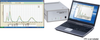
Sensor Gas Chromatograph (SGC) uses a highly sensitive semiconductor gas sensor as a gas detector. The original built-in column is small, enabling the sample gases to be very sensitive and quick separation. [See More]
- Application: Environmental; Medical / Biological
- Oven Temperature Range: 50 to 86
- Instrument Type: Portable
- Injection Method: Syringe Injection