
Analog Front Panel Gas Chromatographs
Description
Analog Front Panel Gas Chromatographs are instruments designed to separate and analyze compounds that can be vaporized without decomposition. They consist of a flowing mobile phase, an injection port, a separation column with a stationary phase, and a detector. These devices are equipped with an analog front panel interface, which allows users to interact with the instrument through analog meters and controls.
Working Principle
Gas chromatographs operate by utilizing differences in partitioning behavior between the mobile phase and the stationary phase to separate compounds. The sample is introduced into the chromatograph, where it is vaporized and carried by an inert gas through the column. As the sample travels through the column, different components separate based on their interactions with the stationary phase. Detectors then measure the concentration of each component as it elutes from the column, producing a chromatogram that displays the results. This process is useful for analyzing complex mixtures and identifying individual components within a sample.
Applications
Gas chromatographs are used in a wide range of industries and applications. Specific examples include the analysis of agricultural chemicals and pesticides, cosmetics and fragrances, drugs and pharmaceuticals, and food and beverage processing. They are also employed in environmental monitoring, forensic analysis, and the testing of industrial gases and petroleum products.
Advantages over other Gas Chromatographs
Analog Front Panel Gas Chromatographs offer several advantages, including simplicity and ease of use due to their analog interface. This can be particularly beneficial in environments where digital interfaces may be less desirable or where users are more familiar with analog controls. Additionally, these instruments can be more cost-effective for certain applications, as they may not require the advanced features of digital models.
Limitations
One limitation of Analog Front Panel Gas Chromatographs is that they may lack the advanced features and capabilities of digital models, such as programmable settings and data storage options. This can limit their use in applications that require high levels of automation or data analysis. Additionally, the analog interface may not provide the same level of precision and accuracy as digital interfaces.
Considerations
When considering the purchase and use of an Analog Front Panel Gas Chromatograph, it is important to evaluate factors such as initial costs, operating expenses, and maintenance requirements. These instruments may have lower initial costs compared to digital models, but operating expenses can vary depending on the specific application and usage. Durability and accuracy are also important considerations, as well as the potential need for replacement parts and maintenance over time. Users should assess their specific needs and the capabilities of the instrument to ensure it meets their requirements.
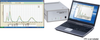
from FIS Inc.
Sensor Gas Chromatograph (SGC) uses a highly sensitive semiconductor gas sensor as a gas detector. The original built-in column is small, enabling the sample gases to be very sensitive and quick separation. [See More]
- User Interface: Analog
- Application: Environmental; Medical / Biological
- Instrument Type: Portable
- Oven Temperature Range: 50 to 86
from O. I. Analytical
Sensitivity in the ppb to high ppm concentration range. [See More]
- User Interface: Analog
- Application: Organic Chemicals
- Instrument Type: Fixtured
- Carrier Gas Text: He

from Shimadzu Scientific Instruments, Inc.
The reliable and compact GC-8A is Shimadzu's basic gas chromatograph model for dedicated applications. Economical and simple to use, the GC-8A supports a single detector, manual pressure or flow control, on column injection port(s), and analog output. Isothermal or single temperature ramp program... [See More]
- User Interface: Analog
- Application: Dedicated Applications
- Instrument Type: Fixtured
- Oven Operation: Oven; Isothermal; Temperature Programmable