
Absolute Encoder Motion Control Systems
Last Updated: February 12, 2025
Description
Absolute Encoder Motion Control Systems are devices that provide precise position feedback by assigning a unique code to each shaft position. This allows the system to determine the exact position of an object without needing to return to a reference point after a power cycle.
Working Principle
Absolute encoders work by using a coded disk that rotates with the shaft. Each position on the disk corresponds to a unique digital code, which is read by a sensor. This code is then sent to a controller, which interprets the position of the shaft. The advantage of absolute encoders is their ability to provide precise position information even after a power loss, making them highly reliable for applications requiring consistent accuracy and repeatability.
Applications
Absolute encoders are used in various applications where precise position feedback is crucial. For example, they are employed in robotic actuation systems where accurate positioning is necessary for tasks such as assembly or welding. They are also used in fine-tuned tightening control systems, where precise torque application is required, such as in the automotive industry for assembling engine components.
Advantages over other Motion Control Systems
Absolute encoders offer several advantages over other motion control systems. They provide continuous position feedback without the need for a homing sequence, which is essential in applications where downtime must be minimized. Additionally, they offer higher reliability in environments where power interruptions are common, as they do not lose position information. This makes them superior to incremental encoders, which require a reference point to determine position after a power cycle.
Limitations
One limitation of absolute encoders is their complexity and cost compared to incremental encoders. The need for a more sophisticated sensor and coding system can increase the initial cost and complexity of the system. Additionally, absolute encoders may require more space due to their design, which can be a constraint in applications with limited installation space.
Considerations
When considering the implementation of absolute encoders, several factors should be taken into account. The initial cost can be higher than other encoder types, but this is often offset by the reduced need for maintenance and increased reliability. Operating expenses may be lower due to the reduced need for recalibration and maintenance. Durability is generally high, but it is essential to ensure that the encoder is suitable for the specific environmental conditions of the application. Accuracy is a significant advantage, but it is crucial to select an encoder with the appropriate resolution for the application to avoid unnecessary costs. Replacement and maintenance costs are typically lower due to the robust nature of absolute encoders, but it is important to consider the availability of parts and support from the manufacturer.

from Aerotech, Inc.
Design Features. 3U, 19-inch rack-mount design with integral drives. Flexible design provides the ability to drive brush, brushless, or stepper motors with the same amplifier. 5 A continuous, 10 amp peak output current. PWM or linear amplifiers. Integral power supplies. IEEE-1394 FireWire interface. [See More]
- Servo Feedback: Hall Effect; Incremental Encoder; Absolute Encoder; Sine / Cosine
- Axes: 4.0 to 8.0
- System: Controller / Drive; Multi-Axis
- Resolution: 12
from TR Electronic
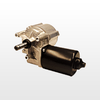
The encoTRive fills the gap between fieldbus and drive technology: It is a compact device containing motor, converter, fieldbus communication, position closed-loop controller and an absolute measuring system as well as optional I/Os and optional brake. [See More]
- Servo Feedback: Absolute Encoder
- Operating Mode: Position
- Resolution: 8
- Communication: CANopen; PROFIBUS
from TR Electronic
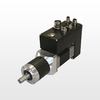
The encoTRive fills the gap between fieldbus and drive technology: It is a compact device containing motor, converter, fieldbus communication, position closed-loop controller and an absolute measuring system as well as optional I/Os and optional brake. [See More]
- Servo Feedback: Absolute Encoder
- Operating Mode: Position
- Resolution: 16
- Communication: CANopen; PROFIBUS