
PALs Device Programmers
Description
PALs (Programmable Array Logic) Device Programmers are specialized tools used to configure PAL devices. These programmers are designed to write specific logic configurations into PAL chips, enabling them to perform desired digital logic functions. The device programmers facilitate the customization of PALs by programming the logic arrays within the chips according to user-defined specifications.
Working Principle
PALs Device Programmers operate by connecting to PAL chips and writing logic configurations into their programmable elements, typically using fuses or non-volatile memory cells such as EPROM, EEPROM, or FLASH. The programmable elements allow for the customization of logic functions, which are implemented through a series of AND and OR gates forming a sum-of-products logic array. This flexibility makes PALs useful for rapidly prototyping and iterating digital logic designs, as they can be reprogrammed to accommodate changes in design requirements.
Applications
PALs Device Programmers are commonly used in applications where custom logic functions are needed. For example, they are often employed in the design of state machines, where fast and efficient logic processing is crucial. Additionally, PALs are used in address decoding tasks, replacing older 7400-series TTL parts, due to their ability to consolidate multiple logic functions into a single chip, thereby reducing board space and power consumption.
Advantages over other Device Programmers
One of the key advantages of PALs Device Programmers is their speed. PALs are known for their fast operation, which is beneficial in applications requiring quick logic processing. Compared to other programmable logic devices like CPLDs and FPGAs, PALs offer a simpler and more cost-effective solution for less complex logic designs. Furthermore, the ability to reprogram PALs allows for flexibility during the design phase, enabling designers to make iterative changes without the need for new hardware.
Limitations
Despite their advantages, PALs Device Programmers have limitations. PALs are generally less complex than CPLDs and FPGAs, which means they may not be suitable for designs requiring a high level of complexity or integration. Additionally, the programming process for PALs can be limited by the number of available programmable elements, which restricts the complexity of the logic functions that can be implemented.
Considerations
When considering the use of PALs Device Programmers, several factors should be taken into account. Initial costs are typically lower than those for more complex programmable devices, making them an attractive option for budget-conscious projects. Operating expenses are also generally lower due to reduced power consumption. However, the durability and accuracy of PALs can vary depending on the specific device and application. Replacement and maintenance costs are typically minimal, but it is important to ensure that the programmer used is compatible with the specific PAL devices being programmed to avoid potential issues.
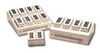
from Data I/O Corporation
A family of universal parallel programmers to support a broad spectrum of devices for production environments. The MultiSyte programmers, with universal pin drivers and manufacturer-approved algorithms at each programming socket, provide excellent device support and programming quality. [See More]
- Devices Supported: PROM; EPROM; EEPROM; FLASH; PLD; EPLD; CPLD; PAL; Microcontrollers; FPGA
- Type / Capability: Multi-Site Programmer / Set Mode
- Operating Mode: Gang
- Memory Buffer: 75
from BPM Microsystems
Fastest programming times, very low voltage support, vision centering [See More]
- Devices Supported: CMOS; PROM; BPROM; EPROM; EEPROM; FLASH; PLD; EPLD; CPLD; PAL; GAL; Microcontrollers; PIC; FPGA; Antifuse; SPLD, FPGA
- Type / Capability: Multi-Site Programmer / Gang Mode
- Operating Mode: Stand-alone Workstation; Production Unit; Stand Alone, Prod Unit
- Number of Pins: 240
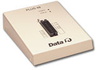
from Data I/O Corporation
The Data I/O Plus 48 is an economical, 48-pin, universal programmer that supports a full range of popular and leading-edge memory, microcontroller, and programmable logic devices. [See More]
- Devices Supported: PROM; EPROM; EEPROM; FLASH; PLD; EPLD; CPLD; PAL; Microcontrollers; FPGA
- Memory Buffer: 75
- Operating Mode: Gang
- IC Package Type Supported: QFP; TSOP; DIP; PLCC; LCC, SOIC, PGA, uBGA
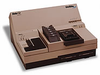
from Data I/O Corporation
The UniSite-xpi supports virtually every programmable device available regardless of technology or package. For industries with extended lifetime products, and also using the newest devices, UniSite-xpi is the most sophisticated programming solution available. [See More]
- Devices Supported: EPROM; EEPROM; FLASH; PLD; CPLD; PAL; Microcontrollers; FPGA
- Memory Buffer: 75
- Operating Mode: Gang
- IC Package Type Supported: SSOP; QFP; TQFP; TSOP; BGA; DIP; PLCC; LCC, SOIC, PGA, uBGA