
Products & Services
See also: Categories | Featured Products | Technical Articles | More Information-
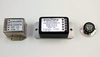
Supplier: Hottinger Brüel & Kjær A/S
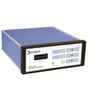
Description: The Dytran model 4010 is a µprocessor controlled, 3-channel DC signal conditioner amplifier designed for use with bridge-type or differential output accelerometers and pressure sensors for a variety of general purpose laboratory testing applications. Units incorporate a variable
-
Supplier: Hottinger Brüel & Kjær A/S
Description: Dytran Model 4794A is a 3-Channel DC Signal Conditioner Amplifier designed to be used with bridge type (piezoresistive) or Variable Capacitance MEMS Accelerometers.
-
Supplier: Encore Electronics, Inc.
Description: The Model 144 is a compact vibration monitoring system with two single-channel modules mounted in a 6”H x 8”W x 12”D carry case. Constant current excitation is provided for an accelerometer charge converter, whose signal is tightly filtered and monitored for exceeding a front-panel-set
- Inputs: Accelerometer Input
- Features: Charge Amplifiers/Converters, Data Acquisition Instrument / System, Other, Vibration and Acceleration
- Excitation: Current Excitation Supply, Voltage Excitation Supply
- User Interface: Front Panel and Display
-
-
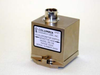
Supplier: Columbia Research Labs, Inc.
Description: precision 4.0Ma constant current to the signal conditioning circuitry within the selected sensor. It also provides a 2 pole 12dB/Octave low pass filter and low impedance AC coupled signal output capable of driving up to 2000pF cable capacity. A second signal output is provided
- Analog Input Channels: 1 #
- Maximum Output: 5 volts
- Operating Temperature: -40 to 212 F
- Inputs: Accelerometer Input
-
Supplier: S. Himmelstein & Company
Description: Summary Single channel universal strain gage signal conditioning instrument and display for load cells, scales, pressure sensors, accelerometers, reaction, slip ring and rotary transformer torquemeters. 6 full digit engineering unit display 7,800 samples/sec/channel 0.5 to 5.0 mV/V and
- Analog Input Channels: 2 #
- Accuracy: 0.02 % FS
- Operating Temperature: 41 to 122 F
- User Interface: Front Panel and Display
-
Supplier: Richardson RFPD
Description: The ADXL206 is a precision, low power, complete dual-axis iMEMS® accelerometer for use in high temperature environ-ments. The accelerometer integrates the sensor with signal conditioned voltage outputs on a single, monolithic IC.
- Acceleration: 5 g
- Measurement Axes: Biaxial
-
Supplier: Kistler Group
Description: converter, provides a high signal level at a low impedance output allowing the use of inexpensive coaxial cable. The accelerometer can be powered by a Kistler 5100 series coupler/signal conditioner or by any industry standard IEPE (Integrated Electronic PiezoElectric)
- Acceleration: -500 to 500 g
- Frequency Range: 0.5 to 10,000 Hz
- Maximum Shock: 5,000 g
- Maximum Vibration: 2,000 g
-
Supplier: Kistler Group
Description: the capacitance between these plates changes. AC excitation and synchronous amplitude demodulation circuitry contained in the accelerometer's internal signal conditioner provides an analog output signal proportional to the applied acceleration. This output signal
- Acceleration: 2 to 200 g
- Frequency Range: 0 to 7,000 Hz
- Maximum Shock: 6,000 g
- Maximum Vibration: 20 g
-
Supplier: Kistler Group
Description: larger and "off-ground" weighs 2,5 grams. Internal microelectronic Piezotron ® signal conditioning circuit converts the charge developed in the quartz element as a result of the accelerometer being subjected to a vibration, into a useable high level voltage signal at a low
- Acceleration: -500 to 500 g
- Frequency Range: 2 to 10,000 Hz
- Maximum Shock: 5,000 g
- Operating Temperature: -320.8 to 302 F
-
Supplier: Honeywell Test & Measurement
Description: The MA331/332 Series accelerometers are designed to be used in Industrial test and automation environments including laboratory testing, modal studies and test cells in application requiring a frequency response down to 0 Hz. The MA331/332 Series accelerometers come in different
- Operating Temperature: 0.4 to 179.6 F
-
Supplier: Kistler Group
Description: accelerometer being subjected to shock, into a useable high level voltage output signal at a low impedance level. The low impedance output provides high immunity to noise and insensitivity to cable motion.
- Acceleration: 5,000 to 100,000 g
- Frequency Range: 0.5 to 10,000 Hz
- Maximum Shock: 50,000 to 120,000 g
- Operating Temperature: -65 to 250 F
-
Supplier: Columbia Research Labs, Inc.
Description: The Columbia Models SR-107RFR and SR-207RFR are precision force balance angular accelerometers. This design makes use of the fluid rotor concept of sensing angular acceleration and in conjunction with the Columbia patented HP suspension system provides the ultimate in reliability and
- Acceleration: 0.1 to 300 g
- Frequency Range: 1 to 1,000 Hz
- Minimum Accuracy: -4 to 4 +/-% FS
- Linear Velocity: 0.1 to 300 in/sec
-
Supplier: Columbia Research Labs, Inc.
Description: The Columbia Models SA-107B and SA-107BHP Servo Accelerometers offer the superior performance of force balance technology and are configured for general purpose and high performance applications respectively. These sensors are ideal for DC and low frequency measurements. The
- Acceleration: -100 to 100 g
- Frequency Range: 30 to 250 Hz
- Minimum Accuracy: 0.1 +/-% FS
- Maximum Shock: 125 g
-
Supplier: Columbia Research Labs, Inc.
Description: ruggedness. No signal conditioning is required to the analog output in most applications. The accelerometer switch contacts can be configured to trigger in one or both directions along the sensitive axis, at a specified G level within a selected operating range. The solid-state relay
- Acceleration: -30 to 30 g
- Frequency Range: 0 to 100 Hz
- Minimum Accuracy: 0.15 +/-% FS
- Maximum Shock: 100 g
-
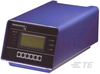
Supplier: TE Connectivity
Description: SIGNAL CONDITIONER W/220VAC PC
-
Supplier: PMC Engineering LLC
Description: KAH Series of accelerometers offer a compact and rugged solution for the motorsport and automotive testing industries with integral signal conditioning to give a standard signal of 0.5V to 4.5V which is ideal for most data acquisition systems. Typical applications include:
- Acceleration: 2 to 200 g
- Frequency Range: 0 to 1,500 Hz
- Minimum Accuracy: 0.3 +/-% FS
- Operating Temperature: -65 to 250 F
-
Supplier: PMC Engineering LLC
Description: The KAE Series of miniature accelerometers offer a compact and rugged solution for the motor sports and automotive testing industries. The sensors offer 1 axis of measurement with integral signal conditioning to give a standard signal of 0.5 to 4.5V which is ideal for most data
- Acceleration: 2 to 200 g
- Frequency Range: 0 to 1,500 Hz
- Minimum Accuracy: 0.3 +/-% FS
- Operating Temperature: -65 to 250 F
-
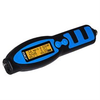
Vibration Measurement Instruments and Vibration Analyzers - Machine Condition Advisor -- CMAS 100-SLSupplier: SKF/Global
Description: and environmentally friendly, the rechargeable SKF Machine Condition Advisor operates 10 hours on a single charge. Flexible enough to work with standard 100 mV/g constant current accelerometers, an optional external sensor can be used for hard to reach locations and for more repeatable and
- Acceleration: 0.2 to 50 g
- Frequency Range: 10 to 1,000 Hz
- Operating Temperature: -4 to 392 F
- Linear Velocity: 0.0275590551181103 to 2.55905511811024 in/sec
-
Vibration Measurement Instruments and Vibration Analyzers - Machine Condition Advisor -- CMAS 100-SLSupplier: SKF/North America
Description: and environmentally friendly, the rechargeable SKF Machine Condition Advisor operates 10 hours on a single charge. Flexible enough to work with standard 100 mV/g constant current accelerometers, an optional external sensor can be used for hard to reach locations and for more repeatable and
- Acceleration: 0.2 to 50 g
- Frequency Range: 10 to 1,000 Hz
- Operating Temperature: -4 to 392 F
- Linear Velocity: 0.0275590551181103 to 2.55905511811024 in/sec
-
Supplier: PMC Engineering LLC
Description: KAA3 Series of triaxial (3 axis) accelerometers offer a compact and rugged solution for the motorsport and automotive testing industries with integral signal conditioning to give a standard signal of 0.5V to 4.5V which is ideal for most data acquisition systems. Supply of 5V or
- Acceleration: 2 to 200 g
- Frequency Range: 0 to 1,500 Hz
- Minimum Accuracy: 0.3 +/-% FS
- Operating Temperature: -65 to 250 F
-
Supplier: Hottinger Brüel & Kjær A/S
Description: The Dytran series 3623 is a unique, IEPE, case isolated, IP68 rated (submersed up to 175 psi) triaxial accelerometer, weighing just 18 grams. This rugged, low noise accelerometer was designed for vibration monitoring in submersible applications. Its small size makes it easy to mount in
- Acceleration: 500 g
- Frequency Range: 1.4 to 3,000 Hz
- Operating Temperature: -67 to 212 F
- Sensor Mounting: Adhesive Base
-
Supplier: PMC Engineering LLC
Description: KAA Series 1 and 2 Axis accelerometers offer a compact and robust solution for the motorsport and automotive testing industries with integral signal conditioning to give a standard signal of 0.5V to 4.5V which is ideal for most data acquisition systems. Supply can be either 5V
- Acceleration: 2 to 200 g
- Frequency Range: 0 to 1,500 Hz
- Minimum Accuracy: 0.3 +/-% FS
- Operating Temperature: -65 to 250 F
-
Supplier: ValueTronics International, Inc.
Description: The 3560A is a 40 kHz signal analyzer from Agilent. Engineers use signal analyzers to combine the capabilities of spectrum and vector signal analyzers. A signal analyzer is a piece of electronic test equipment that takes measurements of power, magnitude, distortion, phase
- Frequency Range: 40 kHz
-
Supplier: OMEGA Engineering, Inc.
Description: The 2-channel OMB-DBK4 dynamic signal-input card enables OMB-LOGBOOK and OMB-DAQBOARD-2000 Series data acquisition systems to accommodate inputs from piezoelectric transducers, such as accelerometers or microphones, as well as from various other dynamic signal sources. Each
- Analog Input Channels: 2 #
- Input Impedance: 0.15 Mohms
- Type: Butterworth
- Features: DC Voltage Input, Input Module
-
Supplier: Sensor Platforms, Inc.
Description: No Description Provided
- Analog Input Channels: 8 #
- Digital I/O Channels: 8 #
- Operating Temperature: -40 to 185 F
- Inputs: Accelerometer Input, LVDT / RVDT Input, Timer / Clock Input
-
Supplier: Rochester Electronics
Description: ADXL50 - Monolithic Accelerometer with Signal Conditioning
-
Supplier: Beckhoff Automation LLC
Description: The EP3632-0001 EtherCAT Box is a 2-channel oversampling interface for up to two IEPE sensors with 2-wire connection. The current of the integrated constant current source can be set to 2, 4 or 8 mA separately for each channel depending on the sensor and cable length. The input signal is
- Data Acquisition: I/O Module
-
Supplier: Beckhoff Automation LLC
Description: The EPP3632-0001 EtherCAT P Box is a 2-channel oversampling interface for up to two IEPE sensors with 2-wire connection. The current of the integrated constant current source can be set to 2, 4 or 8 mA separately for each channel depending on the sensor and cable length. The input signal is
- Data Acquisition: I/O Module
-
Supplier: CSA Group
Description: mechanical mounting of accelerometer stated in ISO 5348 are fulfilled and that the mass of the reference shock ball exceeds at least three times the mass of the accelerometer under test. Phase response of the accelerometer under test gained by this method is considered to be
-
Supplier: PCB Piezotronics, Inc.
Description: Transfer standard reference accelerometer, for use as a double-ended shock calibration working standard. Includes 442A102 ICP® signal conditioner, laser primary calibration at 100 Hz and amplitude linearity from 100 g to 10 kg
-
Supplier: Hottinger Brüel & Kjær A/S
Description: The 4760A is a rugged, hermetically sealed adapter that converts analog IEPE sensor signals into digital CAN output, enabling legacy accelerometers to integrate seamlessly with modern CAN-based systems. Designed for high-performance vibration monitoring and condition-based maintenance,
-
Supplier: PCB Piezotronics, Inc.
Description: Transfer standard reference accelerometer, for use as a double-ended low frequency calibration working standard. Includes 442A102 ICP® sensor signal conditioner, sensor cables and laser primary calibration data from 0.5 Hz to 3500 kHz, A2LA accredited
-
Supplier: MonoDAQ
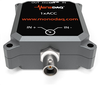
Description: High precision vibration measurements are best done with an IEPE accelerometer. MonoDAQ 1xACC provides high quality signal conditioning for IEPE sensors. Data is transfered over EtherCAT to a PC running powerful and easy to use DEWESoft data acquisition software. Analog input
- High Pass Cutoff Frequency: 0.0001 to 0.001 kHz
- Operating Temperature: -4 to 140 F
- Inputs: Accelerometer Input
- Form Factor: DIN Rail, Panel / Chassis Mount













Find Suppliers by Category Top
Featured Products Top
-
 Dataforth can utilize a large portfolio of over 1000 different signal conditioning modules addressing a wide range of functions such as but not limited to Accelerometer (read more)
Browse Signal Conditioners Datasheets for Dataforth Corporation -
When standard off the shelf signal conditioning solutions will not do the job, Dataforth design and engineering team is ready to help with customized signal conditioning products meeting your needs. Dataforth can utilize a large portfolio of over 1000 different signal conditioning (read more)
Browse Datasheets for Dataforth Corporation -
Each Dataforth 5B module provides a single channel of isolated analog input or output. Input modules interface to all types of external sensors, then filter, isolate, amplify, and convert the input signals to high (read more)
Browse Datasheets for Dataforth Corporation -
displacement. Thanks to the integrated real-time FFT analysis, the condition of a machine can be analyzed and determined during the measurement. The PCE-VM 20 vibration meter can evaluate and display signals from IEPE standard piezoelectric vibration sensors (read more)
Browse Vibration Measurement Instruments and Vibration Analyzers Datasheets for PCE Instruments / PCE Americas Inc. -
on a 16 bits digital signal can generate up to 1 Mb per second which makes raw data transfer critical to existing Industrial IoT infrastructures often offering data bandwidth limited to 100kb or less per second. Moreover, 90% or more of raw data are waisted information for condition monitoring (read more)
Browse Vibration Measurement Instruments and Vibration Analyzers Datasheets for Tronics Microsystems
Conduct Research Top
-
Biasing Internally Amplified Accelerometers
Accelerometers with integrated amplifiers are a popular alternative to those requiring external. charge amplifiers. SigLab's top hatch access to the input signal conditioning circuitry makes. building an internal accelerometer interface easy. This note describes a method of. constructing
-
MEMS Shock Accelerometer
No matter how well designed, an instrumentation system can only correctly condition and record signals from transducers if these signals are transmitted with fidelity via the cable interfacing the transducer to the system. For MEMS (Micro-Electro-Mechanical-Systems) piezoresistive (PR) shock
-
Causes of Zero Offset in Acceleration Data Acquired While Measuring Severe Shock
This paper will discuss the sensing technologies that have come together to minimize these offsets. More important, it will document the many other potential contributors to them. Included among these are accelerometer mounting issues, cable and connector sources, signal conditioning amplitude
More Information Top
 Indicates content that may require registration and/or purchase.

-
http://calhoun.nps.edu/public/bitstream/handle/10945/8682/modalanalysisact00john.pdf?sequence=1
Connect the BNC cable from the accelerometer signal conditioner into the .
-
CR4 - Thread: Bessel versus Butterworth filter
Hi everyone, I am trying to determine the best Low Pass filter choice for accelerometer signal conditioners and I went through specs and documents of National Instruments, PCB Piezotronics, Endevco, Wilcoxon, Iotech.
-
Design and Modeling for Chatter Control
The actuator is provided with a random voltage excitation and the corresponding output acceleration is sensed as a voltage from the accelerometer signal conditioner .
-
Journal of Aircraft > Semi-Active Magnetorheological Helicopter Crew Seat Suspension for Vibration Isolation
These accelerometers were connected to both a dSpace Rapid Prototyping System (for control) and Siglab Data Acquisition System (to collect frequency response data) via the accelerometer signal conditioner .
-
Progress in Structures
Accelerometer Signal Conditioner .
-
Identification of Cable Forces on Cable-Stayed Bridges: A Novel Application of the MUSIC Algorithm
… accelerometers were used to measure cable motion for the 32 downstream stays; data was taken for 5 min at a sampling rate of 160 Hz using a VXITech/Agilent 1432A 16 channel digitizer in conjunction with a PCB 478A16 capacitive accelerometer signal conditioner .
-
The random vibration effects on dissolution testing with USP apparatus 2
Accelerometers (model 370A02) and PCB capacitive accelerometer signal conditioner (445A101), PCB Piezotronics Inc., 3425 Wal- den Avenue, Depew, New York 14043.
-
Hand vibration: non-contact measurement of local transmissibility
Accelerometer signal conditioner .
-
Products :: NASA Tech Briefs
The recorder can be equipped with isolated strain gauge or accelerometer signal conditioners , as well as ultra-high-speed cards offering sampling rates of 100 MS/s, or an isolated 1 kV data acquisition card with ±1000V direct inputs.
-
Products :: NASA Tech Briefs
The recorder can be equipped with isolated strain gauge or accelerometer signal conditioners , as well as ultra-high-speed cards offering sampling rates of 100 MS/s, or an isolated 1 kV data acquisition card with ±1000V direct inputs.